


Best Materials for Custom Engraved Plaques: Complete 2026 Guide
Table of Contents
- Introduction to Plaque Materials: Finding the Right Foundation
- Cast Bronze: The Gold Standard for Permanent Plaques
- Anodized Aluminum: Lightweight and Weather-Resistant
- Stainless Steel: Modern Aesthetics with Industrial Strength
- Wood Options: Walnut, Bamboo, and Alder for Warmth
- Glass and Acrylic Awards: Modern Clarity and Customization
- Brass for Elegant Indoor Signage: Timeless Appeal
- Outdoor vs Indoor Plaque Materials: Choosing the Right Environment
Last Updated: July 15, 2026
When selecting the best materials for custom engraved plaques, the choice often determines whether your award will outlast decades or fade within years. At Gino's Awards, Inc., we've spent over 75 years helping organizations commemorate their greatest achievements with plaques built to last. The material you choose affects durability, engraving quality, aesthetic appeal, and long-term maintenance requirements. Below, we'll examine each major material option so you can make an informed decision based on your specific use case, budget, and environmental conditions.
Research from the National Association of Awards Professionals indicates that organizations investing in high-quality materials see significantly better retention of their commemorative pieces, with bronze and stainless steel plaques showing measurable durability advantages over budget alternatives. The best materials for custom engraved plaques balance three core factors: how well they accept engraving, how they age over time, and whether they suit your indoor or outdoor environment.
Cast Bronze: The Gold Standard for Permanent Plaques
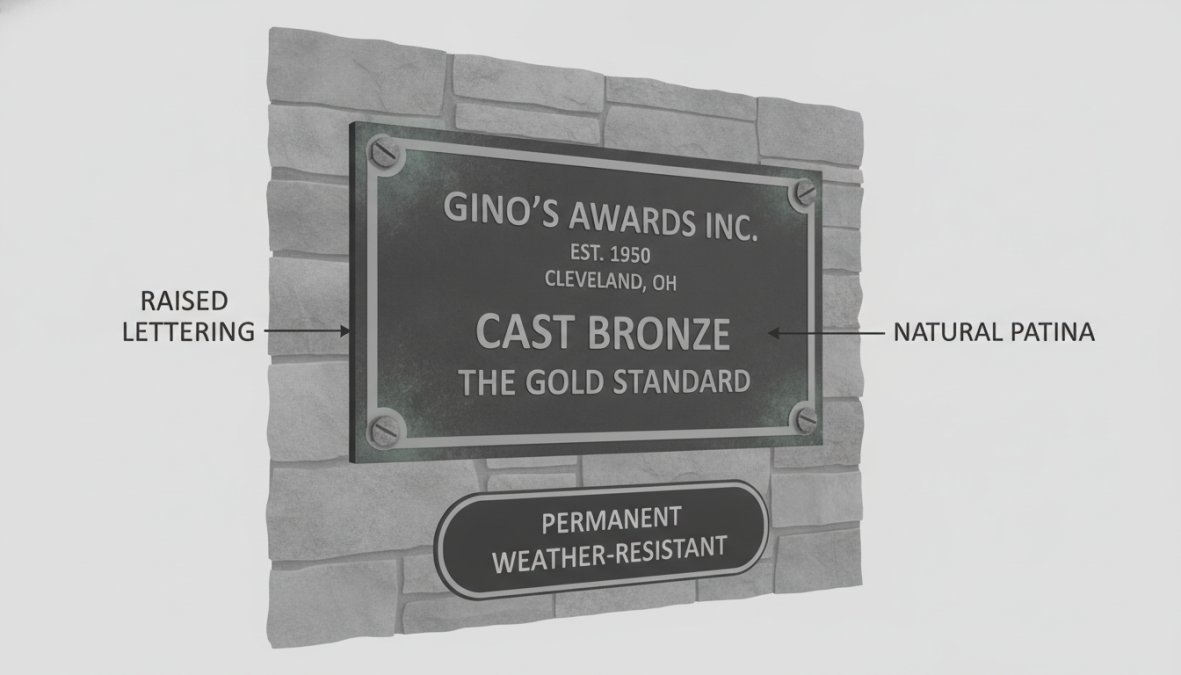
Cast bronze stands as the most prestigious choice for permanent installations, memorial plaques, and legacy awards that will be viewed for generations. This material offers unmatched durability and develops a naturally sophisticated patina over time that actually enhances its appearance rather than degrading it.
Durability and Longevity Profile
Cast bronze plaques routinely outlast 100+ years with minimal maintenance. The metal's inherent corrosion resistance means it won't rust like iron or steel, and it won't degrade like softer materials. Bronze develops a protective patina layer, a greenish or brownish oxidation, that actually shields the underlying metal from further corrosion. This aging process is predictable and aesthetically pleasing, creating a distinguished look that signals permanence and prestige.
The material density of cast bronze means it won't dent or scratch easily from accidental contact. A bronze plaque mounted on a university building or corporate headquarters will look intentional and authoritative decades after installation. This longevity makes bronze the preferred choice for building dedications, war memorials, and institutional recognition where the plaque must survive multiple generations of exposure.
Engraving Compatibility and Patina Development
Cast bronze accepts both rotary engraving and chemical etching exceptionally well. The metal's composition allows for crisp, high-contrast lettering that remains legible even as the surrounding patina develops. High-relief designs, where text and images are raised above the background, work beautifully in bronze, creating shadow effects that enhance readability and visual impact.
The patina development actually improves contrast over time. As the background oxidizes to a darker shade, engraved text that's been polished or left bright stands out more prominently. This natural contrast enhancement is unique to bronze and explains why the oldest bronze plaques often appear more readable than newer ones.
One consideration: if you want to control the patina color, you can apply protective coatings during the engraving process. Some organizations prefer a more uniform appearance and apply lacquer to maintain a consistent bronze tone. Others embrace the full patina for authenticity and character.
Anodized Aluminum: Lightweight and Weather-Resistant
Anodized aluminum offers a practical middle ground between cost and durability. The anodizing process, an electrochemical treatment that thickens the oxide layer, creates exceptional corrosion resistance in outdoor environments while keeping weight and cost manageable.
Outdoor Performance and Corrosion Resistance
Aluminum naturally resists rust because it doesn't contain iron. The anodizing process further hardens the surface, creating a protective barrier that can withstand harsh weather, salt spray, and UV exposure. Research shows anodized aluminum retains its metallic sheen for up to 20 years of outdoor exposure, making it ideal for coastal installations, rooftop signage, and building-mounted plaques in humid climates.
The material is lightweight, roughly one-third the weight of bronze, which simplifies mounting hardware requirements and reduces installation costs. A large anodized aluminum plaque can be mounted securely with standard fasteners, whereas cast bronze often requires heavy-duty structural support.
Anodized aluminum is available in multiple colors: silver, gold, bronze, and black. This color variety allows for high-contrast engraving designs. A gold anodized plaque with black engraved text, for example, creates striking visual contrast suitable for corporate signage and directional plaques.
Stainless Steel: Modern Aesthetics with Industrial Strength
Stainless steel delivers a sleek, contemporary appearance with industrial-grade durability. The 304 stainless steel alloy resists rust and tarnishing in virtually all environments, making it the preferred choice for modern corporate signage, architectural plaques, and outdoor installations where a clean, professional look matters.
Stainless steel engraving produces exceptionally crisp, clean lines. Laser engraving works particularly well on stainless, creating high-contrast results that remain sharp and legible for decades. The metal's density and surface finish allow for fine detail work that would be difficult to achieve in softer materials.
The material's low-maintenance profile appeals to facility managers. Unlike bronze, stainless steel requires no patina management or protective coatings. A simple wipe-down with a damp cloth keeps it looking new indefinitely. This practical advantage makes stainless steel popular for hospitals, government buildings, and corporate campuses where maintenance budgets are tight.
One tradeoff: stainless steel is harder to engrave than softer metals, requiring specialized equipment and experienced technicians. This typically results in higher engraving costs compared to aluminum or wood. The investment pays off in the finished quality, but it's worth budgeting accordingly.
Wood Options: Walnut, Bamboo, and Alder for Warmth
Wood plaques bring organic warmth and elegance to indoor settings. Premium hardwoods like walnut and alder accept engraving beautifully and develop character as they age. Bamboo offers a sustainable alternative with similar engraving properties and lighter coloration.
Walnut wood is the classic choice for executive awards and high-end corporate recognition. Its deep, rich brown tone provides natural contrast for engraved text, and the wood grain adds visual interest and sophistication. Walnut accepts rotary engraving and laser engraving equally well, allowing for both shallow surface engraving and deeper relief designs.
Alder is lighter in color than walnut and offers a more contemporary aesthetic. It's also more affordable, making it suitable for bulk awards or organizational recognition programs. The wood grain is subtle but visible, adding character without overwhelming the engraved design.
Bamboo has gained popularity for sustainability-conscious organizations. The material is technically a grass, not a tree, making it a renewable resource that grows rapidly. Bamboo is harder than many softwoods and accepts engraving crisply. Its pale, neutral tone works well with both dark and light text colors.
Aging Profiles and Natural Patina
Wood ages gracefully when properly finished. A high-quality lacquer or polyurethane coating protects the wood from moisture and UV damage while allowing the grain to remain visible. Over time, wood may develop a subtle darkening or patina as the finish ages, but this typically enhances rather than detracts from the appearance.
Unfinished wood is not recommended for plaques, as moisture absorption leads to warping, cracking, and eventual deterioration. Always specify sealed or finished wood for any plaque that will be displayed in normal indoor conditions.
The main limitation of wood is indoor-only suitability. Direct sunlight, rain, and temperature fluctuations cause wood to warp and split. Wood plaques work beautifully in offices, conference rooms, and indoor display areas, but they're not appropriate for outdoor monuments or exterior building signage.
Glass and Acrylic Awards: Modern Clarity and Customization
Glass and acrylic materials offer contemporary aesthetics with exceptional design flexibility. Cast acrylic accepts laser engraving beautifully, creating frosted or white-etched designs on clear, frosted, or colored backgrounds. Optical crystal, a premium lead-free glass, provides the most luxurious appearance, with exceptional clarity and light-reflecting properties that create a premium feel.
Acrylic is lightweight, shatter-resistant, and available in numerous colors and finishes. Laser engraving creates high-contrast results by removing a thin surface layer to reveal white or frosted areas beneath. This technique allows for intricate designs, photographic images, and layered 3D effects that are impossible in metal or wood.
The main limitation of acrylic and glass is indoor-only use. Prolonged UV exposure degrades acrylic, causing yellowing and brittleness. Direct sunlight can also fade engraved designs. These materials are ideal for desk awards, executive recognition, and indoor display cases, but unsuitable for outdoor monuments or exterior signage.
Optical crystal is the premium choice for high-value corporate awards and executive recognition. The material's weight, clarity, and light-reflecting properties create an unmistakable luxury appearance. Subsurface laser engraving, where the design is etched inside the crystal rather than on the surface, produces stunning 3D effects and exceptional durability.
Brass for Elegant Indoor Signage: Timeless Appeal
Solid brass plaques deliver timeless elegance and a distinctly high-end aesthetic. The material's rich golden hue and natural patina development make brass particularly suitable for memorial plaques, historical markers, and prestigious corporate awards.
Brass accepts engraving exceptionally well, producing high-contrast results with either rotary or chemical etching techniques. The material's malleability allows for raised-letter designs and ornamental borders that enhance the visual impact of the engraved text.
Like bronze, brass develops a natural patina over time. The aging process creates a distinguished appearance that signals permanence and prestige. If you prefer to maintain a bright, polished finish, regular cleaning with brass polish keeps the material looking new. Many organizations embrace the patina for authenticity, viewing the aged appearance as part of the plaque's character.
The primary consideration with brass is maintenance. Brass will tarnish in outdoor environments, requiring regular polishing to maintain appearance. This makes brass better suited to indoor installations where environmental exposure is controlled. For outdoor use, consider bronze or stainless steel instead.
Outdoor vs Indoor Plaque Materials: Choosing the Right Environment
The installation environment is often the deciding factor in material selection. Outdoor plaques face UV exposure, temperature fluctuations, moisture, and salt spray, conditions that eliminate several material options and accelerate aging in others.
Weather Resistance and Durability Factors
Outdoor-suitable materials rank as follows:
Cast bronze leads the list for permanent outdoor installations. The material's natural patina protects underlying metal indefinitely, and the dense composition resists physical damage from weather and accidental contact.
Anodized aluminum is the practical choice for outdoor signage where weight and cost matter. The anodizing process creates reliable corrosion resistance, and the material's lightweight nature simplifies installation.
Stainless steel (304 grade) offers modern aesthetics with industrial durability. The alloy resists rust and tarnishing in virtually all outdoor conditions, making it suitable for coastal environments where salt spray accelerates corrosion in other metals.
Natural slate and stone materials are inherently weather-resistant and develop character as they age. Deep engraving in stone creates high-contrast designs that remain legible for centuries.
Indoor-only materials include acrylic, most wood options, and brass. These materials require controlled environments to prevent degradation, warping, or tarnishing.
| Material | Best Environment | Weather Resistance | Maintenance | Aesthetic |
|---|---|---|---|---|
| Cast Bronze | Outdoor/Monument | Excellent | Low (patina optional) | Prestigious, aged |
| Anodized Aluminum | Outdoor/Signage | Very Good | Low | Modern, clean |
| Stainless Steel | Outdoor/Modern | Excellent | Very Low | Contemporary, sleek |
| Walnut Wood | Indoor/Executive | Poor | Moderate | Warm, elegant |
| Acrylic | Indoor/Corporate | Poor | Low | Modern, clear |
| Brass | Indoor/Memorial | Good | Moderate | Timeless, golden |
For outdoor installations in harsh climates (coastal areas, high-altitude regions, industrial zones), cast bronze and stainless steel are the only materials that will maintain appearance and structural integrity for decades without significant maintenance.
For indoor corporate environments, wood, acrylic, and brass offer aesthetic flexibility. The choice depends on the organizational culture: wood suggests tradition and prestige, acrylic suggests innovation and modernity, brass suggests timeless elegance.
Selecting the best materials for custom engraved plaques requires balancing durability, aesthetics, environment, and maintenance expectations. At Gino's Awards, Inc., we help organizations navigate this decision by providing expert guidance on material properties, engraving compatibility, and long-term performance. With nearly 75 years of experience crafting custom awards and plaques at our Cleveland facility, we understand which materials deliver results that last. Whether you need a cast bronze memorial, an anodized aluminum directional sign, or an acrylic corporate award, our team can recommend the ideal material and execute your design with precision. Contact Gino's Awards, Inc. at (216) 831-6565 to discuss your project and receive a free personalization consultation, we specialize in fast turnaround times and superior quality that reflects your organization's values.
Frequently Asked Questions
What is the most durable material for outdoor engraved plaques?
Cast bronze and 304 stainless steel are the most durable outdoor materials. Cast bronze is the gold standard for permanent installations, designed to last for generations with minimal degradation. Stainless steel offers exceptional rust and tarnish resistance in harsh weather. Anodized aluminum is also highly durable outdoors, retaining its metallic sheen for up to 20 years. All three develop weather-resistant properties that actually improve with age, making them ideal for memorial plaques and architectural signage exposed to the elements.
Which metal is best for laser engraving?
Anodized aluminum and brass are excellent for laser engraving, offering high-contrast results with clean, crisp detail. Stainless steel can be laser-engraved but requires more power and may be more difficult than softer metals. Aluminum's lightweight composition and anodized finish create ideal conditions for laser-engraved plaques with vibrant color options. For rotary engraving, brass and aluminum are preferred due to their workability. The choice depends on your desired aesthetic, metals like aluminum offer versatility, while brass provides timeless elegance.
How do I maintain an engraved plaque to preserve its appearance?
Maintenance depends on material type. For brass and bronze plaques, use a soft cloth and mild soap to prevent tarnishing, and consider applying protective wax periodically. Stainless steel requires minimal maintenance, occasional cleaning with mild soap and water keeps it looking new. Anodized aluminum should be gently cleaned to avoid scratching the finish. Wood plaques need protection from moisture and UV exposure. Acrylic and glass plaques benefit from gentle cleaning with non-abrasive materials. Regular inspection for corrosion or damage helps catch issues early, extending the life of your custom engraved plaque.
What's the difference between outdoor and indoor plaque materials?
Outdoor plaques must resist weather, UV exposure, and temperature fluctuations, making cast bronze, stainless steel, and anodized aluminum ideal choices. These materials develop protective patinas or finishes that improve with age. Indoor plaques can use more delicate materials like acrylic, optical crystal, or solid brass without UV-resistant coatings. Indoor materials prioritize aesthetic appeal and customization over durability. Wood, acrylic, and Corian work beautifully indoors but degrade with prolonged outdoor exposure. Choosing the right environment-specific material ensures your engraved plaque maintains beauty and integrity for decades.
Are custom engraved plaques environmentally sustainable?
Sustainability varies by material. Cast bronze and stainless steel are fully recyclable and designed for multi-generational use, reducing long-term environmental impact. Anodized aluminum is lightweight and recyclable, minimizing transportation emissions. Natural materials like walnut and bamboo wood offer renewable options with lower processing impacts. Acrylic and plastic laminates have higher environmental costs but last longer than some alternatives. When selecting materials for custom engraved plaques, consider both the material's recyclability and its longevity, a durable plaque that lasts 50+ years has a lower lifetime environmental footprint than cheaper materials requiring replacement.
What materials work best for memorial plaques?
Cast bronze is the traditional choice for memorial plaques due to its unmatched permanence and prestige. Solid brass offers timeless elegance and develops a sophisticated patina over time. Both metals resist weathering and are suitable for outdoor monuments. Natural slate provides a rustic, distinctive appearance with excellent durability. Stainless steel offers a modern alternative with superior corrosion resistance. For indoor memorials, optical crystal and acrylic provide contemporary aesthetics. The best material depends on your vision, choose cast bronze for classic permanence, brass for elegance, or slate for organic beauty.
This article was written using GrandRanker