


Best Way to Clean Crystal Awards: Step-by-Step Guide
Table of Contents
- Why Proper Crystal Award Care Matters
- Essential Cleaning Supplies You'll Need
- Step-by-Step Process: Best Way to Clean Crystal Awards
- Best Cleaner for Crystal: Product Recommendations
- Handling Crystal vs. Acrylic Awards: Key Differences
- How to Polish Crystal Awards for Pristine Clarity
- Remove Scratches from Crystal Awards: Repair Solutions
- What to Avoid: Harsh Chemicals and Risky Practices
Best Way to Clean Crystal Awards: Step-by-Step Guide
Last Updated: July 26, 2026
Why Proper Crystal Award Care Matters
Crystal trophies represent achievement and deserve to sparkle for years. Yet improper cleaning can permanently cloud or scratch the surface. At Gino's Awards, Inc., we've crafted high-quality crystal awards since 1950 and seen firsthand what happens when recipients don't know how to care for their pieces. Fingerprints, dust, and mineral deposits dull brilliance, while wrong cleaning methods, harsh chemicals, abrasive cloths, rough scrubbing, etch surfaces or leave permanent streaks.
The good news: proper cleaning takes 10-15 minutes, costs almost nothing, and keeps awards pristine indefinitely.
Essential Cleaning Supplies You'll Need
You don't need expensive specialty products; most supplies are already in your home or available at any drugstore.
Recommended Cleaners for Crystal
Mild dish soap is one of the safest options. A few drops diluted in warm water cuts through fingerprints without leaving residue. The key is dilution, too much soap creates a cloudy film.
For stubborn mineral deposits, white vinegar works exceptionally well. Mix equal parts white vinegar and distilled water to dissolve mineral buildup without toxicity.
Ammonia-free glass cleaners like Invisible Glass deliver streak-free results. These prevent the cloudy residue that ammonia-based cleaners leave behind, costing around $4-8 per bottle.
For mixed-material awards, Brillianize Plastic and Acrylic Cleaner offers anti-static protection that repels dust at roughly $15-25 per bottle.
Tools and Materials
Microfiber cleaning cloths are non-negotiable. These lint-free cloths prevent streaks and residue that paper towels leave behind. Never use paper towels, tissues, or regular cotton cloths, they shed fibers and scratch crystal.
Distilled water is essential for final rinsing. Tap water contains minerals that leave spots and cloudiness. A gallon costs $1-3.
Soft cotton towels absorb water during drying without scratching. Use smooth cotton, not terry cloth.
Room-temperature water prevents thermal shock. Crystal can crack if exposed to sudden temperature changes.
| Supply | Purpose | Cost | Notes |
|---|---|---|---|
| Microfiber cloth | Polishing and drying | $10-30/pack | Reusable, machine washable |
| Distilled water | Rinsing and diluting | $1-3/gallon | Prevents water spots |
| Mild dish soap | General cleaning | $3-7/bottle | Dilute 1-2 drops per cup |
| White vinegar | Mineral deposit removal | $2-5/gallon | Mix 1:1 with distilled water |
| Soft cotton towel | Drying | $5-15 | Lint-free preferred |
| Glass cleaner (ammonia-free) | Streak-free finish | $4-8/bottle | Optional but recommended |
Step-by-Step Process: Best Way to Clean Crystal Awards
Step 1: Prepare Your Workspace
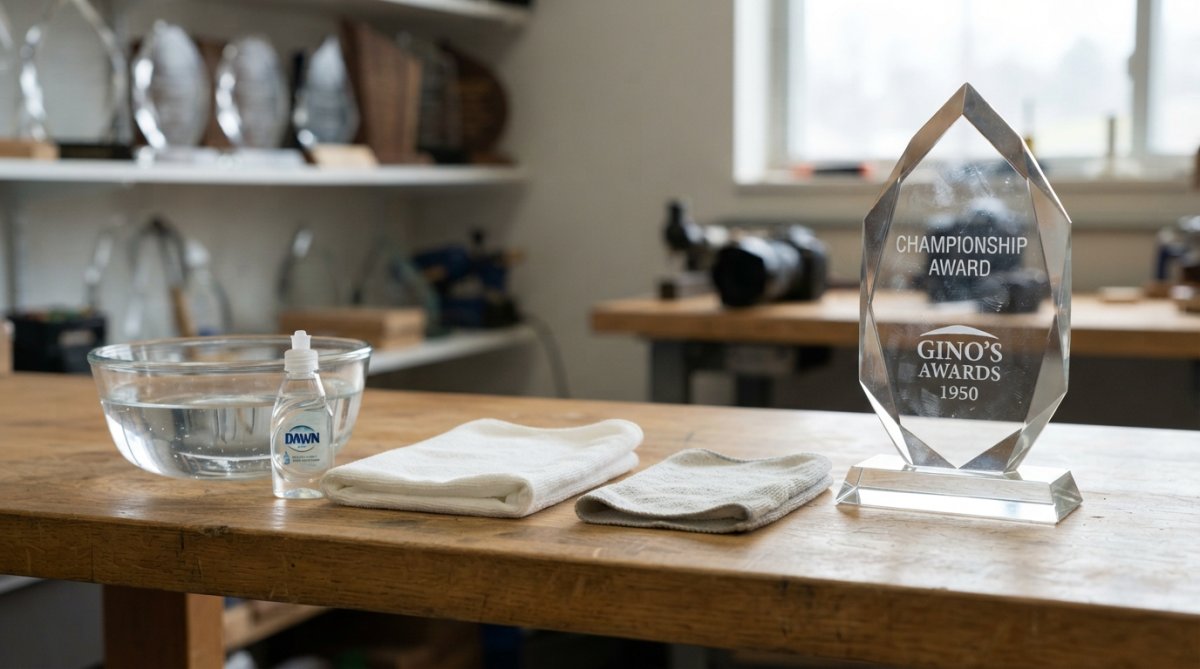
Find a flat, stable surface with good lighting. Lay down a soft cotton towel to cushion the award and prevent sliding. Fill a bowl with room-temperature water and add just 1-2 drops of mild dish soap. Gather all supplies within arm's reach.
Step 2: Remove Dust and Debris
Before wet cleaning, remove loose dust with a dry microfiber cloth using light, circular motions. Pay special attention to engraved areas and crevices. For textured surfaces, a soft-bristled brush works well for dislodging trapped particles.
Step 3: Wash with Mild Soap Solution
Dip a clean microfiber cloth into your soap solution and wring it out thoroughly, the cloth should be damp, not dripping. Gently wipe the entire crystal surface with soft circular motions. For engraved areas, use a soft cloth or soft-bristled brush to gently work the soapy water into grooves.
Avoid submerging awards with wooden bases or metal components; clean only the crystal portion or use a damp cloth for mixed-material pieces.
Step 4: Rinse Thoroughly with Distilled Water
Dampen a fresh microfiber cloth with distilled water and wipe the entire crystal surface. Repeat 2-3 times to ensure all soap is gone. Any remaining soap creates a hazy film.
For stubborn mineral deposits, use your vinegar solution (equal parts white vinegar and distilled water). Gently wipe affected areas, then immediately rinse with distilled water to remove the vinegar smell.
Step 5: Dry and Buff to Shine
Never air-dry crystal awards; water spots form as distilled water evaporates. Pat the award dry gently with a clean, lint-free cotton towel or microfiber cloth, working from top to bottom. Once dry to the touch, use a fresh microfiber cloth to buff it to a high shine with light circular motions.
Best Cleaner for Crystal: Product Recommendations
Ammonia-Free Glass Cleaners
Invisible Glass stands out as the best commercial option for streak-free results on crystal awards. This ammonia-free formula prevents the cloudy residue that traditional window cleaners leave behind. Spray it lightly onto a microfiber cloth (never directly onto the crystal), then wipe in circular motions. A 22 oz bottle costs $4-8 and lasts for dozens of cleanings.
Natural Alternatives: White Vinegar Solution
For natural cleaning, white vinegar outperforms commercial products at removing mineral deposits. Mix equal parts white vinegar and distilled water in a spray bottle. The acetic acid dissolves mineral buildup that soap alone cannot remove, costing less than $5 to make.
The only drawback is smell, which requires thorough rinsing with distilled water. For regular maintenance (monthly or quarterly), mild soap and distilled water suffice. Reserve vinegar solution for deep cleaning when mineral buildup becomes visible.
Handling Crystal vs. Acrylic Awards: Key Differences
Crystal is glass, hard and scratch-resistant when handled properly, but prone to thermal shock and can etch if exposed to certain chemicals. It's heavier than acrylic and feels cold to the touch.
Acrylic is plastic, lightweight and shatter-resistant, but more prone to scratching and static electricity. It's warmer to the touch than crystal.
When cleaning mixed-material awards, treat acrylic portions more gently. Use softer cloths and avoid harsh scrubbing. For acrylic awards, skip the vinegar solution, the acidity can cloud acrylic over time. Stick with mild soap and distilled water, followed by an anti-static cleaner for a dust-resistant finish.
How to Polish Crystal Awards for Pristine Clarity
Buffing Techniques for Maximum Sparkle
After drying your award completely, use a fresh microfiber cloth and apply light pressure in circular motions across the entire crystal surface. Work systematically, top to bottom, left to right. The circular motion distributes natural oils evenly and brings out the crystal's inherent shine.
For flat surfaces, use larger circular motions. For curved or detailed areas, use smaller, more controlled circles. Avoid straight-line buffing, which creates visible streaks.
For maximum brilliance, use an ammonia-free glass cleaner after buffing. Spray it onto the cloth (never directly onto the award), then buff once more for a mirror-like finish.
Preventing Water Spots During Drying
Water spots form when mineral-laden water evaporates. Prevention is far easier than removal.
Use distilled water for all rinsing, it contains no minerals, so no spots form as it evaporates. During drying, prevent pooling water by tilting the award slightly so water runs off. Pat dry immediately after rinsing.
If spots form after drying, dampen a microfiber cloth with your vinegar solution and gently wipe affected areas. Rinse immediately with distilled water and dry thoroughly.
Remove Scratches from Crystal Awards: Repair Solutions
Assessing Scratch Severity
Surface scratches are light marks that catch light at an angle but don't affect appearance from normal viewing distance. These typically don't require repair.
Deep scratches are visible from any angle and may have raised edges. These affect appearance and clarity but sometimes can be minimized with professional help.
Cracks are breaks in the crystal structure that may spread over time. These require professional restoration and should not be attempted at home.
Minor Scratch Repair Techniques
For minor surface scratches, cerium oxide polish (used for glass restoration) can minimize visibility. Apply a small amount to a soft cloth and rub the scratched area in circular motions for 30 seconds. Rinse thoroughly with distilled water and dry. This may require 2-3 applications.
For very light scratches, non-gel whitening toothpaste contains mild abrasives. Dampen a soft cloth, apply a tiny amount, and gently rub the scratch in circular motions for 20 seconds. Rinse immediately with distilled water.
The best approach: prevent scratches through careful handling. Store awards in padded boxes, avoid stacking them, and keep them away from high-traffic areas.
What to Avoid: Harsh Chemicals and Risky Practices
Ammonia-based glass cleaners leave streaks and residue. Stick with ammonia-free options.
Abrasive scrubbing pads scratch crystal permanently. Avoid scouring pads, steel wool, or rough cloths. Always use soft microfiber or smooth cotton.
Bleach and harsh disinfectants etch crystal surfaces and damage metal components.
Hot water causes thermal shock. Always use room-temperature or lukewarm water.
Dishwashers are off-limits. High heat, harsh detergents, and violent water jets damage crystal and can dislodge plaques or metal components.
Stacking or storing awards loosely invites scratches and breakage. Store each award in a padded box or display case.
Direct sunlight for extended periods can cause discoloration or fading of colored crystal or painted elements.
Keeping crystal awards pristine requires just a few minutes of attention and the right approach. Gentle soap, distilled water, and proper drying preserves their brilliance for decades.
At Gino's Awards, Inc., we've been crafting crystal awards since 1950 with materials designed to last. Our family-owned team in Cleveland, Ohio, knows that the awards we create deserve to be maintained properly. When you need custom crystal awards with free personalization and fast turnaround, Gino's Awards, Inc. delivers the quality your achievements deserve. Call (216) 831-6565 or visit our website to explore our full selection of crystal and acrylic awards.
External Sources & Further Reading
According to The Smithsonian Institution's conservation guidelines for glass artifacts, crystal and glass require specific handling to prevent thermal shock and chemical damage, which aligns with the room-temperature water and gentle cleaning approach recommended here.
Research from the American Chemical Society on mineral deposits and hard water explains why distilled water prevents water spots, tap water minerals remain after evaporation, while distilled water contains no minerals to leave behind.
The National Institutes of Health's material science research on crystal composition provides insight into why certain chemicals etch crystal surfaces while others clean safely, supporting the recommendation to avoid ammonia-based cleaners.
Frequently Asked Questions
What is the best cleaner for crystal awards?
The best cleaner for crystal awards is a simple solution of mild dish soap diluted in room-temperature distilled water. For stubborn water spots or mineral deposits, white vinegar diluted with distilled water works excellently. Avoid ammonia-based cleaners and abrasive materials. For a streak-free finish after initial cleaning, ammonia-free glass cleaners like Invisible Glass deliver professional results without damaging the crystal's surface.
How do you remove fingerprints and smudges from crystal awards?
Remove fingerprints by gently wiping the crystal with a lint-free microfiber cloth dampened slightly with distilled water. For stubborn smudges, use a soft cotton towel with a few drops of mild dish soap mixed into distilled water. Buff dry immediately with a clean microfiber cloth to prevent water spots. Never use paper towels or rough fabrics, as these can scratch the surface and leave residue.
Can you remove scratches from crystal awards?
Minor surface scratches on crystal awards can sometimes be improved using a non-abrasive polishing technique. For light scratches, apply a small amount of non-abrasive glass polish and gently buff with a microfiber cloth in circular motions. However, deep or etched scratches are permanent and cannot be fully repaired at home. For significant damage, consult a professional award restoration service or contact your award provider like Gino's Awards for guidance.
How often should you clean crystal awards?
Clean crystal awards every 3-6 months with gentle dusting using a microfiber cloth to prevent dust and debris buildup. Perform a thorough cleaning with mild soap and distilled water annually, or more frequently if the award is displayed in a high-traffic area or dusty environment. Environmental factors like humidity and temperature fluctuations may require more frequent maintenance to preserve clarity and prevent water spots.
This article was written using GrandRanker