


Corporate Award Design Trends 2026: A Forward Guide
Table of Contents
- Corporate Award Design Trends 2026 Overview
- Minimalist and Modern Aesthetic in Award Design
- Sustainable Corporate Awards and Eco-Conscious Materials
- Personalized Employee Awards and Customization Trends
- Innovative Award Materials and Material Innovation
- Corporate Gifting Trends 2026 and Digital Integration
- Psychology of Recognition and Award Impact
- Budget-Friendly Trend Implementation for Mid-Sized Organizations
Corporate Award Design Trends 2026: A Forward Guide
Last Updated: July 20, 2026
The corporate recognition market is shifting. Employees expect awards that reflect their individual contributions, not generic trophies pulled from a catalog. At Gino's Awards, Inc., we've tracked how corporate award design trends 2026 are reshaping recognition programs across industries. Companies that understand these emerging design principles are seeing higher employee engagement and stronger retention metrics among recognized staff.
Modern corporate recognition demands awards that communicate value, sustainability, and personalization. Below, we'll show you exactly how to implement these trends, whether you're refreshing an annual gala or building a comprehensive recognition program.
Corporate Award Design Trends 2026 Overview
Award design has evolved from "bigger is better" to "intentional is better." Generic crystal plaques no longer cut it. Organizations are moving toward bespoke awards that tell a story about the recipient and the company.
Three core shifts define this moment. First, sustainability has become non-negotiable. Second, customization and personalization drive emotional impact. Third, design excellence, combining minimalist aesthetics with premium materials, separates forgettable awards from ones employees treasure.
Workplace demographics matter. Younger employees prioritize purpose and authenticity. An award made from sustainable bamboo signals that your company cares about climate action. An award personalized with the recipient's name and specific achievement shows that recognition is earned, not distributed. These design choices communicate respect and drive engagement.
Minimalist and Modern Aesthetic in Award Design
Minimalism isn't about doing less, it's about doing only what matters. In award design, this means clean lines, purposeful negative space, and materials that speak for themselves. Edge-lit acrylic and crystal innovation have become the gold standard for minimalist corporate recognition.
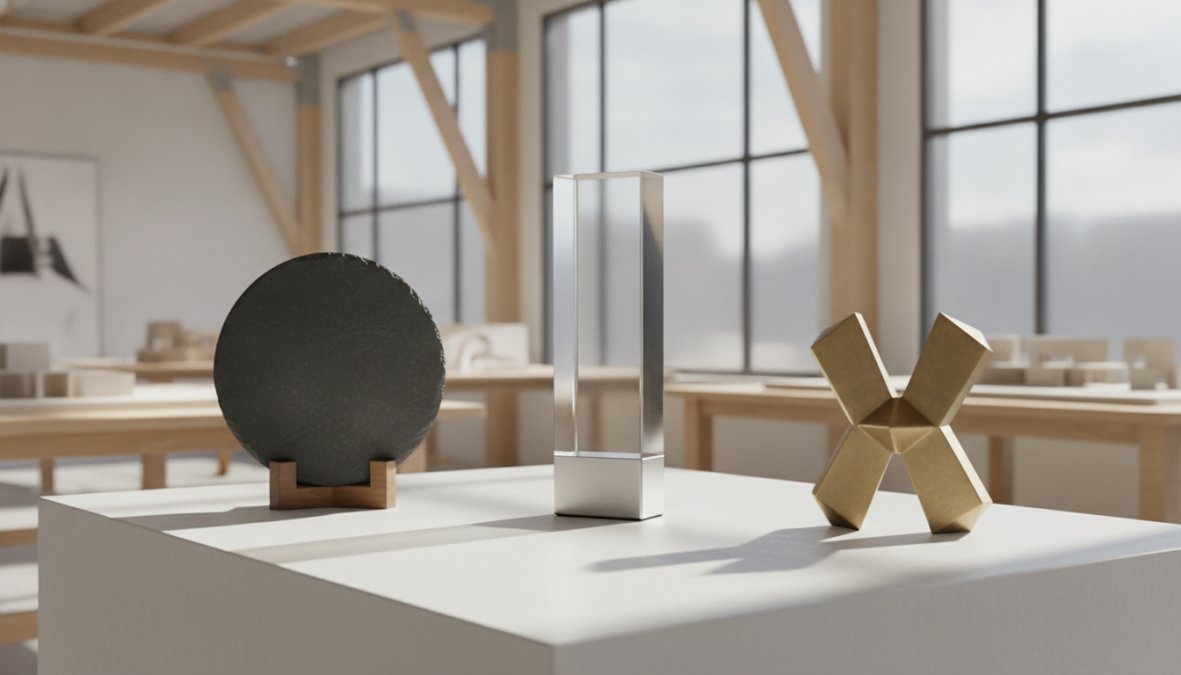
An award with three clean lines and a single color-fill communicates more than one covered in ornamental details. The recipient feels the quality immediately. Edge-lit acrylic uses internal LED lighting to illuminate the acrylic's edges, creating a floating effect that feels premium without being ostentatious. Tech startups and financial firms embrace this approach because it communicates sophistication and innovation.
Minimalist awards often feature sans-serif fonts, negative space around text, and monochromatic color schemes. Premium materials, brushed stainless steel, frosted acrylic, or solid walnut, create visual interest through texture rather than ornamentation.
Sustainable Corporate Awards and Eco-Conscious Materials
Sustainability has moved from nice-to-have to essential. Employees increasingly expect their employers to demonstrate environmental responsibility. Eco-conscious materials are no longer a differentiator, they're an expectation.
A truly eco-conscious award considers every stage: sourcing, manufacturing, transportation, and end-of-life disposal. Bamboo plaques score well because bamboo regrows quickly, requires minimal processing, and biodegrades naturally. Recycled acrylic and reclaimed wood also rank high.
What separates greenwashing from genuine sustainability? Transparency. Organizations serious about climate action communicate where materials come from and how they're processed. Gino's Awards, Inc. sources materials with full supply chain visibility, ensuring that sustainability claims are backed by documentation, not marketing language.
Bamboo plaques deserve special attention. They're affordable, renewable, and carry natural aesthetic appeal. A bamboo plaque with laser-engraved text feels warm and organic, very different from cold crystal. For mid-sized organizations, bamboo offers the sustainability story without the premium price tag of recycled acrylic or reclaimed wood.
Personalized Employee Awards and Customization Trends
Generic recognition doesn't stick. Personalization transforms an award from "something everyone gets" to "something uniquely mine." Custom color-fill technology enables awards to match brand identity while maintaining minimalist design. Instead of a plain acrylic block, imagine one with your company's primary color subtly integrated into the design.
Some organizations now use employee data to customize award designs. An award for a sales representative might feature a subtle graph showing their quarterly growth. An award for a designer might incorporate elements from a project they led. This level of personalization requires coordination between HR, design teams, and award manufacturers, but the impact justifies the effort.
Personalization signals that recognition is earned, not automatic. When an award includes specific achievements, dates, or metrics, the recipient knows their work was noticed and valued.
Innovative Award Materials and Material Innovation
Beyond traditional crystal and metal, award manufacturers are experimenting with industrial design approaches. Bespoke awards now incorporate unexpected materials: reclaimed barn wood, cast concrete, hand-blown glass, and lab-grown diamonds. Each material tells a different story. Concrete signals strength and durability. Hand-blown glass communicates artistry. Reclaimed wood emphasizes heritage and sustainability.
Emerging designer collaborations have become a trend. Companies partner with local artisans to create one-of-a-kind awards. This approach supports the creative community, produces genuinely unique recognition pieces, and signals that your organization values craftsmanship.
An award might be designed to serve as a desk sculpture, a bookshelf accent, or a wall-mounted piece. This utility extends the award's lifespan in the recipient's environment. Rather than being stored in a drawer, a well-designed award becomes part of their workspace.
Corporate Gifting Trends 2026 and Digital Integration
The line between physical awards and digital recognition continues to blur. Physical awards now connect to digital experiences. A physical award paired with a QR code might link to a video of the CEO announcing the recognition or a digital portfolio of the recipient's achievements.
AI-generated award concepts represent the frontier here. Design platforms now use AI to suggest award designs based on company branding, recipient profile, and achievement type. These tools accelerate the ideation process without replacing human designers.
Digital transformation also affects how awards are ordered, tracked, and displayed. Submission platforms enable employees to nominate peers, vote on winners, and view past recipients. The award itself remains physical, but the recognition process becomes transparent and participatory.
Psychology of Recognition and Award Impact
Why does a premium material matter psychologically? Because it signals value. When an employee receives an award made from quality materials, their brain processes this as: "My contribution is worth investing in." This perception drives engagement and loyalty.
Recognition that feels genuine, because it's specific, timely, and visually impressive, produces measurable behavioral changes. Employees who receive personalized, well-designed awards show higher retention rates and increased discretionary effort on subsequent projects.
Premium materials drive meaningful recognition through multiple channels. First, the tactile experience creates a physical memory. Second, the visual display encourages recipients to display it prominently, reinforcing the recognition daily. Third, the durability signal suggests the achievement will be remembered long-term.
Budget-Friendly Trend Implementation for Mid-Sized Organizations
Not every organization has unlimited recognition budgets. Many 2026 design trends are accessible at mid-market price points. Bamboo plaques cost significantly less than edge-lit acrylic but communicate sustainability just as effectively. Minimalist designs reduce material waste, lowering costs while improving aesthetics.
The key is prioritizing which trends matter most for your organization. If sustainability is core to your brand, invest there. If personalization drives your culture, customize heavily.
Award categories help mid-sized organizations manage costs. Rather than commissioning unique awards for every recognition level, establish 3-4 award categories with distinct designs. A "Innovator Award" might use minimalist acrylic. A "Team Player Award" might use bamboo. A "Leadership Award" might feature premium materials. This tiered approach maintains design quality while controlling expenses.
Gino's Awards, Inc. specializes in serving mid-sized organizations by offering fast turnaround times and flexible customization options. With over 75 years of experience, the team understands how to deliver design-forward awards without premium pricing. Free personalization and on-site manufacturing at their Cleveland facility enable quick iterations, which means less waste and lower costs for clients.
Award Submission Guidelines and Implementation Strategy
Implementing these trends requires clear processes. Award submission guidelines should outline what achievements qualify for recognition and what award tier each achievement receives.
Effective guidelines include category definitions, submission deadlines, approval workflows, and timeline expectations. A well-designed submission platform makes this process transparent. Employees should understand what behaviors are recognized, how to nominate peers, when winners are announced, and what their award will look like.
Implementation also means training managers and HR teams on the new awards. When managers can articulate why an award was chosen, "We selected bamboo because it aligns with our sustainability commitment," the recognition becomes more meaningful.
Industry-Specific Design Categories
Different industries prioritize different award qualities. Tech companies often favor minimalist, edge-lit acrylic designs that communicate innovation. Healthcare organizations might prioritize sustainable materials that reflect patient care values. Financial services firms often choose premium crystal that communicates stability and trust.
Understanding your industry's design expectations helps you stand out. A financial firm that breaks from tradition with a minimalist bamboo award sends a message: we're evolving. The award design trends 2026 are industry-agnostic in principle but industry-specific in application.
Meaningful recognition requires thoughtful design, sustainable materials, and genuine personalization. The corporate award design trends 2026 reflect a fundamental shift: awards should feel earned, look premium, and align with organizational values.
For organizations ready to implement these trends, Gino's Awards, Inc. offers fast turnaround times, superior quality products, and free personalization. With nearly 75 years of experience and on-site manufacturing in Cleveland, the team delivers design-forward awards without premium pricing. Call (216) 831-6565 to discuss your recognition program and see how modern award design can strengthen your workplace culture.
Frequently Asked Questions
What are the main corporate award design trends emerging in 2026?
The 2026 corporate award design trends emphasize minimalist aesthetics, sustainable materials, and personalization. Expect to see edge-lit acrylic awards, bamboo plaques, custom color-fill options, and integration of digital elements. Design excellence now centers on intentional ideation that reflects company values, with an emphasis on both visual communication and material innovation. Organizations are moving toward bespoke awards that feel premium and meaningful rather than generic.
How are sustainable corporate awards and eco-conscious materials influencing award design?
Sustainability is reshaping award material choices significantly. Organizations are prioritizing bamboo plaques, recycled materials, and products with transparent material lifecycle analysis. This trend connects corporate recognition to climate action messaging, allowing companies to align awards with their environmental values. Eco-conscious design doesn't sacrifice aesthetics, modern sustainable awards maintain industrial design appeal and premium feel while reducing environmental impact. This approach resonates especially with emerging designers and forward-thinking companies seeking authentic brand identity alignment.
Can personalized employee awards fit a mid-sized organization's budget?
Yes. Budget-friendly trend implementation focuses on strategic customization rather than premium materials for every award. Custom color-fill options, data-informed personalization of names and achievements, and thoughtful design choices can create meaningful recognition without excessive costs. Working with experienced manufacturers offering flexible award categories and fast turnaround allows organizations to balance design excellence with budget constraints. The psychology of recognition shows that intentional personalization often matters more than price, employees value awards reflecting their specific contributions regardless of material cost.
What role does digital integration play in corporate award design for 2026?
Digital transformation is expanding award design beyond physical objects. Motion design, AR elements, and AI-generated award concepts are emerging trends that complement traditional awards. Some organizations are creating digital components that accompany physical recognition, submission platforms with visual previews, design gala presentations with motion graphics, and data-informed design processes that use analytics to inform award selection. However, physical awards remain central; digital integration enhances rather than replaces the tactile experience of receiving a premium, intentionally crafted award.
This article was written using GrandRanker