



Corporate Award vs Trophy: Key Differences Explained
Table of Contents
- Corporate Award vs Trophy: Understanding the Core Differences
- When to Use a Trophy vs an Award in Corporate Settings
- Trophy Materials and Their Impact on Recognition
- Types of Corporate Awards and Recognition Solutions
- Award Personalization and Engraving Best Practices
- Corporate Recognition Programs: Integrating Awards and Trophies
- Comparison Table: Award vs Trophy at a Glance
- How to Choose the Right Recognition Item for Your Organization
Last Updated: July 19, 2026
Understanding the corporate award vs trophy differences is essential for organizations creating meaningful recognition programs. While often used interchangeably, these items serve distinct purposes and choosing the right one significantly impacts how achievements are perceived and remembered.
Corporate Award vs Trophy: Understanding the Core Differences
A corporate award honors specific achievements, milestones, or contributions with emphasis on the recipient's accomplishment and organizational values. Awards feature engraving space for names, dates, and details, making them deeply personal and commemorative. A trophy is a competitive recognition symbol representing victory or superiority in a contest. Trophies emphasize winning itself and are often displayed as shared achievement symbols.
This distinction matters psychologically. Research from the Society for Human Resource Management shows employees receiving personalized, achievement-specific recognition demonstrate 63% higher engagement than those receiving generic acknowledgment. Corporate awards excel here, creating tangible, permanent records of individual contribution.
Design conventions also differ significantly. Awards favor sophistication and permanence, crystal, acrylic, or engraved plaques suitable for decades of display. Trophies feature figurines, cups, or columns emphasizing competitive triumph. A sleek crystal award engraved with specific achievement says "we recognize your contribution." A traditional trophy says "you won the competition."
When to Use a Trophy vs an Award in Corporate Settings
Trophy Use Cases
Trophies excel in competitive, performance-based contexts where winning drives motivation. Sales teams pursuing quarterly contests, departmental sports competitions, or annual ceremonies with multiple competitors all benefit from trophy recognition.
Trophies leverage competitive psychology effectively. When employees know they're competing for a trophy, it creates urgency and focus. High-performance environments where competitive drive aligns with organizational goals see strong results. Teams competing for "Best Customer Service" or "Highest Sales Growth" respond more enthusiastically to trophies than certificates.
Trophies work well for recurring competitions. Annual sports days, hackathons, or innovation challenges benefit from trophy-based recognition that becomes part of company culture identity.
However, trophies have limitations. In collaboration-focused cultures or flat hierarchies, trophies can create tension. If only one person wins, what about other high performers? Awards provide a better solution here.
Award Use Cases
Corporate awards excel in recognition scenarios honoring contributions without zero-sum competition. Service anniversaries, project milestones, customer excellence, innovation contributions, and peer recognition all benefit from awards.
Awards allow recognizing multiple employees simultaneously, critical for maintaining morale. Rather than one trophy winner, you can present awards to ten employees hitting specific milestones. This shifts messaging from "you beat everyone" to "you achieved something meaningful."
Personalization matters significantly. Engraving an employee's name, achievement, and date creates a deeply personal artifact sitting on their desk as a daily reminder. Harvard Business Review research shows personalized, tangible recognition produces longer-lasting motivation than cash bonuses.
Awards integrate better with corporate branding. Customized design, materials, and engraving reinforce organizational identity throughout your recognition program.
| Recognition Type | Best For | Competitive? | Personalization | Display Value |
|---|---|---|---|---|
| Trophy | Sales contests, team competitions, championships | High | Low (generic) | High (visible symbol) |
| Award | Service anniversaries, achievement milestones, individual contributions | Low | High (engraved) | High (desk/shelf) |
| Plaque | Departmental achievements, facility displays, permanent recognition | Medium | High (engraved) | Very High (wall-mounted) |
| Acrylic/Crystal Award | Premium recognition, executive awards, high-impact moments | Low | High (engraved) | High (desk display) |
Trophy Materials and Their Impact on Recognition
Material Choices and Psychological Impact
Material choice communicates organizational values. A cheap plastic trophy signals obligatory recognition. A well-crafted metal or resin trophy signals the achievement matters.
Material affects longevity and display behavior. Metal trophies with quality construction last decades, becoming office keepsakes. Plastic trophies deteriorate within years. Durable trophies are more likely to be displayed, reinforcing recognition messages continuously.
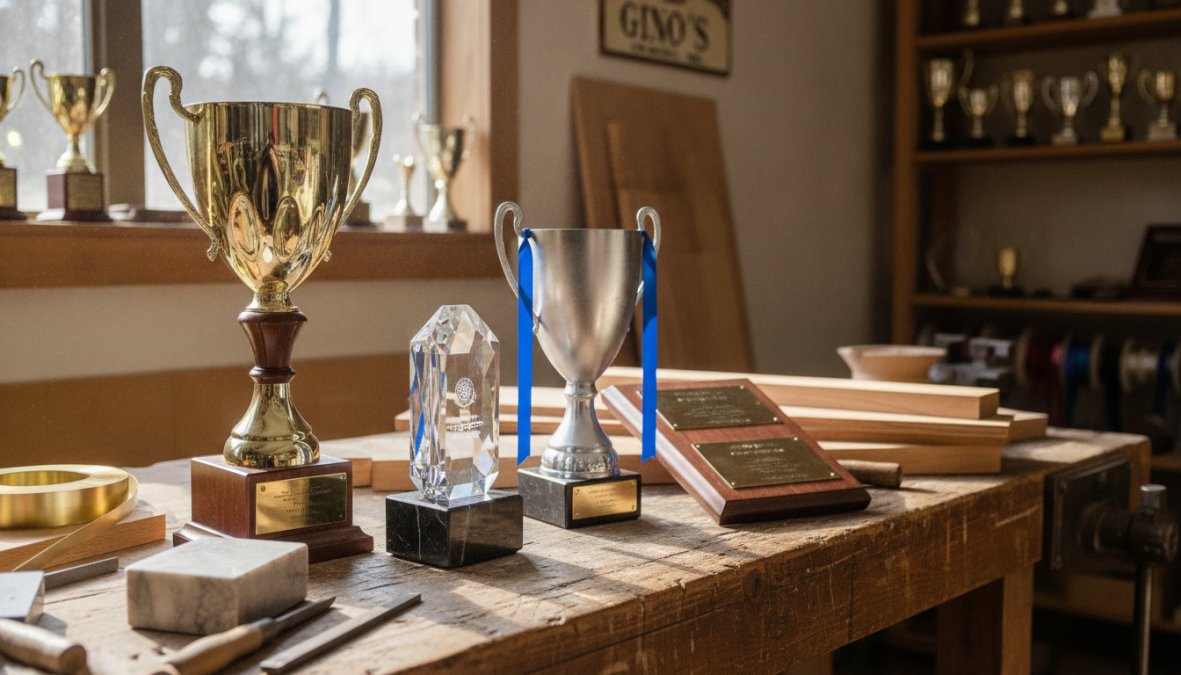
Research on material perception shows people consistently rate heavier, more durable items as more valuable and meaningful. Crystal and metal trophies outperform plastic in employee satisfaction studies. Weight, finish quality, and durability all communicate genuine, valued recognition.
Durability and Longevity Considerations
Durability extends recognition value. A professional-looking trophy after five years continues motivating. A yellowed, cracked trophy becomes embarrassing, signaling the organization didn't invest in quality recognition.
For organizations building recognition culture, investing in durable materials pays dividends. Quality materials ensure recognition doesn't fade with time but becomes organizational legacy.
Maintenance matters too. Crystal and acrylic require minimal upkeep and look professional indefinitely. Metal may need occasional polishing. Plastic requires frequent cleaning and replacement. Long-term, quality materials often prove more economical than replacing cheap trophies repeatedly.
Types of Corporate Awards and Recognition Solutions
Plaques and Engraved Recognition Items
Plaques represent versatile recognition solutions for corporate environments. They work equally well as individual awards, departmental recognitions, or permanent facility installations. Engraved plaques with achievement details, dates, and names create permanent records displayable on office walls, in lobbies, or work areas.
Plaques excel through permanence and visibility. While trophies sit on shelves, plaques mount prominently where they're seen daily by recipients, colleagues, and visitors. Extended visibility amplifies recognition messages and reinforces organizational values.
Plaques work well for milestone recognition: service anniversaries, project completions, and departmental achievements. Engraving space allows detailed information including names, specific achievements, dates, and company logos.
Crystal and Acrylic Awards
Crystal and acrylic awards represent premium corporate recognition. These materials communicate sophistication, quality, and genuine appreciation. They're ideal for executive-level recognition, major milestones, or high-stakes competitions requiring special recognition.
Crystal catches light and creates visual interest, beautiful objects people want to display. Acrylic offers similar appeal with lower cost and greater design flexibility. Both customize with logos, colors, and engraving reflecting your brand.
The psychological impact is significant. Employees perceive crystal or acrylic recognition as more valuable and meaningful than standard alternatives. Premium materials communicate exceptional achievements worthy of investment.
Custom Trophies and Figurine-Based Recognition
Custom trophies move beyond generic designs, creating recognition items reflecting specific culture and values. Rather than standard figurines, commission custom designs representing your industry, mission, or specific achievements.
A tech company might feature innovation-related figurines. A customer service organization might create service excellence figures. Custom designs create stronger emotional connections than generic trophies and reinforce organizational identity.
Custom trophies require longer lead times and higher minimums, but for organizations building distinctive programs, the investment pays off in employee engagement and brand reinforcement.
Award Personalization and Engraving Best Practices
Customization Options for Maximum Impact
Personalization transforms generic awards into meaningful artifacts. Most effective personalization includes: recipient name, specific achievement or milestone, recognition date, and optionally company logo or values-based message.
Personalization depth affects perceived value. An award with only a name feels generic. An award engraved with "Sarah Chen - Exceeded Customer Satisfaction Goals by 18% - Q2 2026" communicates specific recognition and creates permanent achievement records. This specificity drives long-term motivation.
Color customization enhances impact. Customizing to match brand palette creates visual cohesion across recognition programs and reinforces brand identity.
Engraving Space and Design Considerations
Effective engraving balances visual appeal with informational content. Too much text clutters; too little misses personalization opportunities. Ideal approaches balance both elements.
Consider information hierarchy: recipient name first (largest text), achievement/milestone (medium text), date and company information (smaller text). This visual hierarchy guides the eye and ensures readability.
Engraving technique matters. Deep, precise engraving creates professional appearance lasting indefinitely. Shallow engraving can fade over time. Quality equipment and skilled technicians ensure awards maintain appearance for decades.
Corporate Recognition Programs: Integrating Awards and Trophies
Building a Cohesive Recognition Strategy
Effective programs use both awards and trophies strategically. A comprehensive strategy might include: trophies for competitive events and sales contests, awards for individual achievement and service milestones, and plaques for permanent facility recognition.
Integration with HR systems amplifies impact. When recognition ties to performance reviews, promotion criteria, or compensation decisions, it gains weight. Random recognition feels performative.
Frequency and consistency matter. Monthly ceremonies, quarterly presentations, and annual competitions create predictability and anticipation. Employees know recognition is coming, driving engagement.
Leadership narrative amplifies meaning. Explaining why someone is recognized, connecting achievement to organizational values and strategic goals, makes recognition more meaningful. "Highest sales while maintaining 95% customer satisfaction" connects achievement to values better than "highest sales."
Post-Ceremony Display and Long-Term Value
Recognition extends beyond ceremonies. Long-term display and visibility of awards and trophies extends motivational value. Employees displaying awards on desks see them daily; colleagues see them and remember the recognition culture.
Organizations amplify this through recognition displays: walls featuring recent recipients, trophy cases showcasing winners, or digital boards highlighting achievements. These displays extend recognition beyond individuals and reinforce organizational commitment to excellence.
Physical placement matters. A trophy gathering dust has no motivational value. Prominently displayed trophies, on shelves, in lobbies, on executive desks, communicate that achievement is valued and remembered.
Over time, accumulated recognitions become organizational story. New employees see trophy cases and understand excellence. Long-tenured employees see their awards and feel recognition continuity. This creates powerful culture where achievement is visible, valued, and permanent.
Comparison Table: Award vs Trophy at a Glance
| Factor | Corporate Award | Trophy | Plaque |
|---|---|---|---|
| Primary Purpose | Honor specific achievement or milestone | Celebrate competitive victory | Permanent recognition or facility display |
| Personalization | High (engraved with details) | Low (generic figurine) | High (detailed engraving) |
| Competitive Element | Low | High | Medium |
| Display Location | Desk, shelf, personal space | Shelf or case | Wall or prominent location |
| Longevity of Motivation | Very High (daily visibility) | High (trophy case display) | Very High (permanent installation) |
| Best For | Individual contributors, service anniversaries | Sales contests, team competitions | Departmental achievements, facility landmarks |
| Cost Range | Moderate to Premium | Low to Moderate | Moderate to Premium |
| Customization | Extensive (materials, design, engraving) | Limited (figurine options) | Extensive (design and engraving) |
How to Choose the Right Recognition Item for Your Organization
Budget Considerations and ROI
Recognition budgets vary, but the principle remains: invest in quality over quantity. A single well-crafted crystal award communicates more about organizational values than ten cheap plastic trophies.
Consider cost per recipient and long-term value. A premium award at $75 per person sitting on desks for decades delivers better ROI than a $10 trophy deteriorating within a year. Quality recognition's lasting impact extends far beyond initial cost.
Budget affects frequency and scale. Larger budgets enable monthly awards and quarterly competitions. Smaller budgets might focus on annual recognition. Consistency matters most, whatever frequency you choose.
Sustainability and Corporate Values
Modern organizations increasingly consider sustainability in recognition programs. Cheap plastic trophies ending in landfills contradict environmental values. Quality, durable awards align recognition with corporate responsibility.
Consider materials: crystal and acrylic have minimal environmental impact and last indefinitely. Metal trophies are recyclable and durable. Sustainable material plaques minimize waste. Avoid disposable recognition items undermining sustainability messaging.
Employees valuing environmental impact appreciate recognition items aligning with their values. Premium, durable awards made from sustainable materials communicate organizational commitment to both employees and the planet.
Timeline and Turnaround Requirements
Recognition timing affects impact. Recognizing achievements weeks later feels delayed and less meaningful. Ideally, recognition happens within days or weeks.
Turnaround speed matters significantly. If custom awards require 4-6 weeks, timely recognition becomes difficult. Fast turnaround enables quick recognition without sacrificing quality.
Plan recognition calendars around realistic production timelines. Quarterly ceremonies require 2-3 week turnaround. Monthly recognition needs faster delivery. Align vendor capabilities with your recognition schedule.
Choosing between corporate awards and trophies requires understanding organizational culture, recognition goals, and desired messaging. Awards excel at honoring individual achievement and creating lasting personal recognition. Trophies shine in competitive contexts where winning drives engagement. Sophisticated programs use both strategically.
Gino's Awards, Inc. brings 75 years of experience helping organizations build recognition programs that motivate and inspire. With free personalization, on-site manufacturing in Cleveland, and fast turnaround times, we ensure recognition items arrive on time and exceed expectations. Whether you need custom trophies, engraved awards, or personalized plaques, our family-owned team is ready to help. Call (216) 831-6565 to discuss your recognition program and get a quote today.
Frequently Asked Questions
What is the main difference between a corporate award and a trophy?
The primary distinction lies in purpose and design. Trophies typically feature a figurine or sculptural element on top of a base and emphasize competitive achievement or victory. Corporate awards are broader recognition items, including plaques, certificates, and custom pieces, designed to acknowledge diverse achievements, milestones, and service anniversaries. Awards often prioritize personalization and engraving space, while trophies focus on symbolic representation of achievement. Both serve corporate recognition programs, but trophies are more competitive in nature, whereas awards celebrate a wider range of accomplishments.
When should a company use a trophy versus an award in their recognition program?
Use trophies for competitive, performance-based recognition, sales contests, athletic events, or championship-style competitions where a winner is clearly defined. Choose awards for broader corporate recognition programs: service anniversaries, milestone achievements, employee appreciation, and non-competitive recognition. Awards work better for personalization and engraving of individual names and dates. Trophies excel at creating visual impact and symbolic recognition of victory. Many organizations use both: trophies for competitions and awards for annual recognition ceremonies, ensuring your recognition strategy aligns with the achievement type and workplace culture you want to reinforce.
What materials work best for corporate awards and trophies, and does material choice matter?
Material choice significantly impacts perception and longevity. Crystal trophies convey premium quality and sophistication, ideal for high-level recognition. Acrylic awards offer durability, affordability, and excellent engraving space. Metal-based trophies provide classic appeal and symbolic weight. Plaques in wood or composite materials suit service anniversaries and milestone awards. The psychological impact of material choice is real, recipients perceive heavier, higher-quality materials as more valuable recognition. Consider sustainability too: eco-friendly materials align with modern corporate values. For fast turnaround and customization flexibility, domestically manufactured awards ensure quality control and free personalization options that enhance the tangible rewards aspect of your recognition program.
How important is personalization and engraving for corporate recognition items?
Personalization is critical for meaningful corporate recognition. Engraved names, dates, and achievement details transform generic items into tangible rewards that employees display with pride. Adequate engraving space allows for achievement milestones, company branding, and individual recognition. Free personalization services eliminate cost barriers and ensure accuracy, critical for avoiding costly mistakes on large orders. Customization options like logo placement and design flexibility strengthen brand identity while making recipients feel valued. Post-ceremony display of personalized awards reinforces workplace culture and serves as ongoing motivation for peers. When choosing recognition items, prioritize vendors offering comprehensive personalization and quality engraving techniques to maximize the symbolic recognition value.
Can we integrate awards and trophies into a unified corporate recognition program?
Absolutely. A comprehensive corporate recognition program uses both strategically. Trophies serve performance-based competitions and annual awards ceremonies, creating high-impact visual recognition. Awards handle ongoing recognition: service anniversaries, employee achievement milestones, peer-to-peer recognition, and incentive programs. This hybrid approach maximizes employee morale and reinforces diverse aspects of workplace culture. Ensure consistency in brand identity, material quality, and professional presentation across both trophy and award selections. Consider HR software integration for tracking recognition events and recipient data. Plan post-ceremony display guidelines, quality recognition items deserve prominent placement in offices, creating lasting motivation. Fast turnaround times and flexible service from experienced providers enable you to scale this strategy as your recognition needs grow.
This article was written using GrandRanker