



Creative Ways to Display Student Achievement Plaques
Table of Contents
- Why Student Achievement Plaques Matter in Schools
- School Award Wall Ideas That Inspire Recognition
- Student Recognition Wall Ideas for Hallways and Entryways
- Academic Award Display Ideas Using Shadow Boxes and Cases
- Classroom Recognition Board Ideas for Ongoing Achievement
- Rotating Displays and Digital Recognition for Limited Spaces
- Caring for Your Student Achievement Plaques and Displays
- Frequently Asked Questions
Last Updated: October 18, 2026
Why Student Achievement Plaques Matter in Schools
Student achievement plaques do more than hang on a wall. When a student sees their name engraved on one, they feel seen and valued.
Schools that display student achievement plaques create a culture where excellence is visible and celebrated. Hallways become galleries of success, and the plaques become teaching tools reminding students that hard work leads to recognition.
At Gino's Awards, Inc., we've watched this happen for over 75 years. Quality student achievement plaques don't just honor past success, they inspire future achievement. A plaque is a physical promise: "Do excellent work, and we will recognize it."
But displaying plaques well takes planning. A poorly placed plaque gets ignored; a thoughtful one becomes a centerpiece of school culture. This guide covers that strategy.
School Award Wall Ideas That Inspire Recognition
A school award wall is your most visible recognition tool, the first thing visitors see and where students linger between classes.
The best school award walls balance visual impact with organization. They feel intentional, never cluttered, never sparse.
Create a tiered display. Use different heights and depths to add visual interest. Mount plaques at eye level for students, slightly higher for adults, and stagger them so no two sit at exactly the same height. This creates rhythm and makes the wall more engaging.
Group plaques by achievement type. Academic awards in one section, athletic in another, leadership and service in a third. This helps viewers find what they're looking for and makes the wall easier to maintain and update.
Add lighting. Poor lighting makes even quality plaques look dull. Track lighting or LED strips behind the array draws the eye and makes the display feel premium.
Include a title or header. "Academic Excellence Wall" or "School Achievement Recognition" tells visitors what they're looking at and frames the display as intentional, not random.
Update quarterly or annually. A static wall loses impact. Rotate in new plaques as students earn them and remove outdated ones to keep the display fresh.
Student Recognition Wall Ideas for Hallways and Entryways
The hallway is where students spend the most time between classes, and an entryway is the first impression families get. Both are prime real estate for student recognition walls.
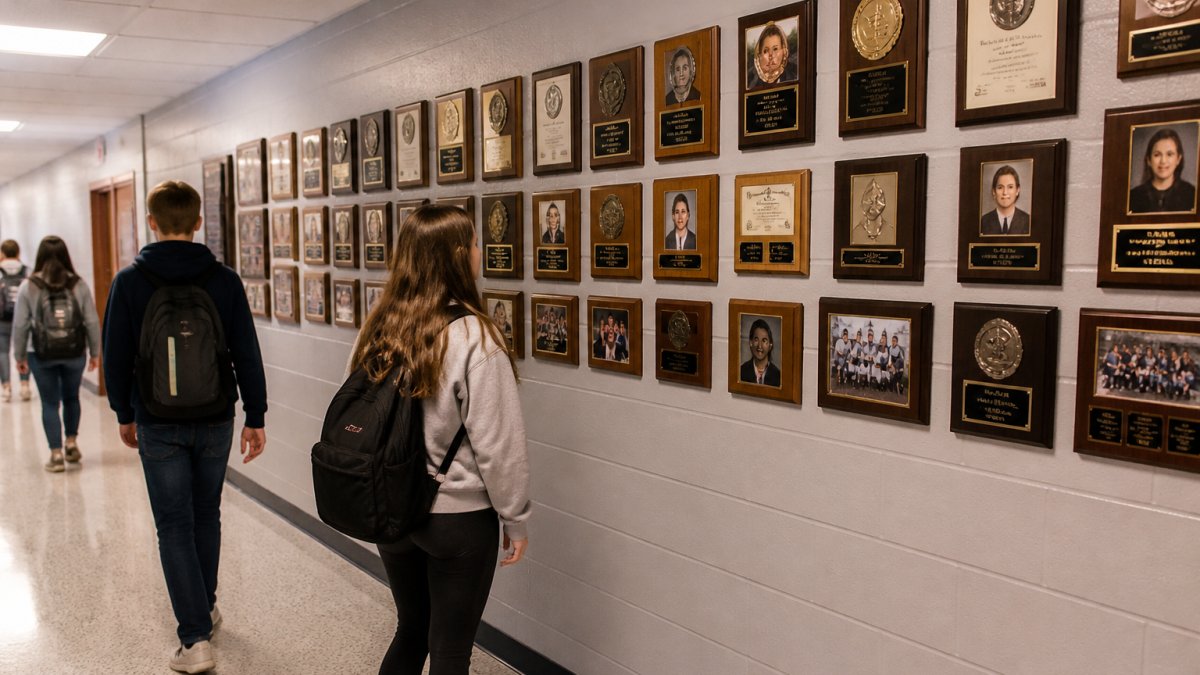
Make it a "Wall of Fame." Dedicate one hallway wall to student achievement plaques and include photos alongside them when possible. Showing the student's face, name, and accomplishment creates a personal connection a plaque alone cannot.
Create a timeline display. Arrange plaques chronologically by year or graduation class. This helps visitors understand your school's history of achievement and makes specific years easy to find.
Use shadow boxes for medals and ribbons. A shadow box preserves physical medals or ribbons while displaying them beautifully. Mount it next to the corresponding plaque for a complete picture of the achievement.
Include brief descriptions. Add a small nameplate or label explaining what the student achieved. "Sarah Chen, State Science Fair Winner, 2026" tells a story; just a name and date does not.
Rotate displays by season or semester. Feature fall athletes in September, academic award winners in January, and service leaders in spring. This keeps the wall dynamic and ensures all students get recognition at some point.
Make it accessible. Mount plaques at varying heights, some at eye level for younger students, some higher for adult visitors, so everyone can see and appreciate the achievement.
Academic Award Display Ideas Using Shadow Boxes and Cases
Shadow boxes are professional, elegant, and protective, ideal for displaying academic awards alongside certificates, photos, ribbons, or medals.
A shadow box is a shallow framed box with a glass front. You arrange items in layers inside; the glass protects them from dust and damage, and the frame makes the display look gallery-quality.
Mount a plaque as the centerpiece. Place your student achievement plaque in the center and arrange supporting items around it, a certificate above, a medal below, a photo to the side. This creates visual balance and tells the complete story.
Use a trophy case for multiple displays. For a larger collection, a trophy case works better than individual shadow boxes. Glass shelves let light through, and arranging plaques, trophies, and certificates on different levels creates depth and visual interest.
Add a nameplate or description card. Include a small label with the student's name, the achievement, and the date. This context transforms a nice-looking display into a meaningful one.
Frame the entire display. Mount the shadow box or trophy case on a wall or in a dedicated alcove, framed with paint color or architectural trim. This tells viewers: "This display matters. Pay attention."
Keep it clean and organized. Dust regularly, replace faded labels, and remove items that no longer fit the theme. A well-maintained shadow box looks professional; a neglected one looks forgotten.
Classroom Recognition Board Ideas for Ongoing Achievement
Not all achievement happens at the school level. Classrooms are where daily excellence happens, good grades, helpful behavior, thoughtful questions, creative projects.
A classroom recognition board captures this ongoing achievement. It's smaller and more personal than a school award wall. It changes frequently. It celebrates the wins that happen every week.
Create a "Student of the Month" board. Dedicate one bulletin board to rotating student recognition. Feature one or two students each month. Include a photo, a short write-up about why they were chosen, and a small plaque or certificate. This keeps the board fresh and gives every student a chance to be featured.
Use a "Wins Wall." Invite students to post their own achievements, test scores, project completions, personal goals reached. This board is student-driven, which makes it more meaningful. It also teaches students to recognize their own progress.
Display student artwork and projects. Pair student work with a recognition plaque or label. "Maya's Award-Winning Science Project" or "Best Short Story: James Chen." This connects the student's name to their accomplishment in a tangible way.
Add a digital component. Use a monitor or tablet to display a rotating slideshow of student achievements. Include photos, certificates, and plaques. This works well in classrooms with limited wall space.
Update weekly. A recognition board that changes weekly stays relevant. Students check it. They care about it. They aspire to be featured on it.
Rotating Displays and Digital Recognition for Limited Spaces
Not every school has unlimited wall space. Not every classroom has room for a permanent display.
Build a rotating display system around a standard track. Instead of drilling new holes for every plaque, install a wall-mounted aluminum display track or a French cleat rail at a consistent height. Plaques hang from adjustable hooks or clips, so you can swap them each term without patching drywall.
Use a rolling display cart for shared spaces. A locking display cart with felt-lined shelves lets a single plaque collection travel between the library, front office, and cafeteria.
Plan digital displays for readability, not just novelty. A hallway monitor works best when text is large enough to read from 10 feet away, generally 2 inches of cap height or more for names and achievement lines.
Create a "Hall of Achievement" binder for overflow. Document plaques that are not currently on display in a professional binder kept at the front office or library. Include a photo of each plaque, the student's name, the achievement, and the date.
Use a vertical grid for small collections. Mount small floating shelves in a grid pattern, typically 12 to 18 inches apart, so each shelf holds one plaque or a small shadow box. This maximizes vertical space and creates a striking visual effect.
Rotate by term, not by whim. Set a calendar: fall athletes in September, academic award winners in January, service leaders in spring. A predictable schedule keeps the display fresh and ensures all students get recognition at some point.
Make every rotation accessible. Vary mounting heights so younger students and wheelchair users can see plaques at eye level, and keep labels in high-contrast, large-print text.
Caring for Your Student Achievement Plaques and Displays
A quality student achievement plaque should last decades. But it only stays beautiful with proper care, and the care depends on what the plaque is made of.
Dust with the right cloth. Use a soft, dry microfiber cloth. Avoid paper towels and abrasive pads, which can micro-scratch acrylic faces and dull metal plates. For wood plaques, dust along the grain.
Control UV exposure. Direct sunlight fades engraving fill, yellows acrylic, and dries wood. If plaques sit near windows, move them to an interior wall or add UV-blocking film to the glass.
Watch humidity. Wood plaques can warp or crack when humidity swings widely. Keep displays in climate-controlled hallways and avoid mounting plaques directly above radiators, vents, or exterior doors where drafts and moisture collect.
Clean glass and cases correctly. Spray glass cleaner onto the cloth, not the glass, so liquid cannot seep behind the frame and stain the plaque face.
Check mounting hardware quarterly. Tighten screws and brackets, and confirm anchors are still secure. A falling plaque is a safety hazard and can crack acrylic or chip wood.
Store unused plaques properly. If you rotate displays, store plaques in a cool, dry place in protective sleeves or boxes. Keep them off concrete floors, which wick moisture, and away from direct light.
Know when to repair versus replace. Minor scratches on acrylic can sometimes be polished out; deep cracks usually mean replacement.
Document your displays. Photograph each recognition wall and display, and keep a record of what is displayed where and when. This helps with future updates and provides a historical record of your school's achievements.
Frequently Asked Questions
What are the best ways to display student achievement plaques in a school hallway?
Hallway displays work best when organized by achievement type or grade level, using wall-mounted frames, shadow boxes, or dedicated trophy cases positioned at eye level for visibility. Combine plaques with photographs and achievement descriptions to create an engaging gallery wall. Ensure displays are well-lit and updated regularly to maintain student interest and motivation. Rotating sections seasonally keeps the display fresh and gives more students recognition opportunities.
How can schools make an award wall more engaging for students?
Make award walls interactive by including student photos, achievement descriptions, and personal stories alongside plaques. Use varied frame styles, colors, or themed sections to break up monotony. Add a digital component like QR codes linking to video highlights or student reflections. Update displays monthly and celebrate new additions with announcements. Consider allowing students to design sections or vote on layout changes to increase engagement and ownership.
What materials work best for displaying student achievement plaques long-term?
High-quality wood plaques with engraved nameplates resist warping and maintain appearance for decades. Shadow boxes protect plaques from dust and damage while displaying them attractively. Metal stands and acrylic risers keep plaques elevated and visible. For outdoor or high-traffic areas, consider weather-resistant materials. Store backup plaques in climate-controlled spaces to prevent fading or deterioration, and dust displays monthly with soft cloths to preserve engraving quality and shine.
How do schools ensure equitable student recognition across different achievement areas?
Establish clear recognition criteria that include academic, athletic, artistic, and service achievements to represent all student contributions. Rotate which achievements are featured prominently to avoid favoring one category. Set goals for recognizing students from different grade levels and backgrounds. Create separate display sections for different achievement types so no single category dominates wall space. Review recognition practices annually to identify gaps and ensure all students have equal opportunities to be celebrated.