


How to Choose Employee Appreciation Awards: A Strategic Guide
Table of Contents
- Why Employee Recognition Matters to Your Organization
- Define Your Program Goals and Core Values First
- Employee Recognition Award Ideas That Drive Engagement
- How to Choose Employee Appreciation Awards for Your Workplace
- Employee Appreciation Award Wording and Nomination Criteria
- Best Practices for Employee Recognition Programs
- Budget Allocation and Award Selection Strategy
- Conclusion
Last Updated: August 7, 2026
Why Employee Recognition Matters to Your Organization
Employee recognition directly impacts retention, engagement, and team performance. When people feel valued, they stay longer, work harder, and become advocates for your company culture.
This guide from Gino's Awards, Inc. covers how to choose employee appreciation awards that move the needle. We've worked with hundreds of organizations since 1950, and we've seen what separates recognition programs that stick from ones that fizzle. The difference isn't budget or complexity. It's intentionality.
Recognition programs that align with your company values create behavioral reinforcement. People repeat actions that get acknowledged. When your awards reflect what your organization stands for, you're shaping future behavior. Teams that feel recognized report higher morale, better collaboration, and lower turnover. But most organizations treat awards as an afterthought, a generic plaque ordered at the last minute. These miss the mark entirely.
Define Your Program Goals and Core Values First
Before selecting a single award, answer this question: What exactly are you trying to reinforce?
Are you recognizing years of service? Exceptional performance? Living your core values? Peer-to-peer collaboration? The answer determines everything that follows: award style, engraving, frequency, and nomination criteria.
Start by identifying what behaviors and achievements matter most to your organization. If your core values include innovation, celebrate people who take smart risks. If collaboration is central, peer-to-peer recognition becomes critical. If you're service-driven, milestone recognition for long tenure signals that loyalty matters.
Write these goals down specifically. "Recognize great work" is too vague. "Celebrate employees who embody our core value of customer obsession through exceptional problem-solving" is actionable. This clarity becomes your north star when choosing between award options.
Your program goals also determine recognition frequency. Annual service anniversaries follow a clear calendar. Spot recognition for exceptional performance happens throughout the year. Quarterly milestone celebrations keep momentum steady. All three can coexist in a mature program, but they require different award types and budgeting approaches.
Employee Recognition Award Ideas That Drive Engagement
Understanding the main award categories helps you match the right award to the right moment.
Engraved plaques and trophies remain the backbone of formal recognition. They work especially well for service anniversaries, major project completions, and milestone celebrations. When someone sees their name engraved on a plaque displayed in your office, that's powerful reinforcement.
Crystal and glass awards carry a premium feel and convey that the achievement is special. These work best for top-tier recognition or executive-level awards.
Personalized desk items, pen sets, desk clocks, leather portfolios, blend recognition with utility. People use them daily, so the award becomes a constant reminder of the achievement.
Service anniversary awards mark tenure milestones at five, ten, and twenty years. Many companies use tiered systems: bronze for 5 years, silver for 10, gold for 20. This signals progression and encourages retention.
Certificates and frames work for smaller achievements or budget-conscious programs. A beautifully designed, professionally framed certificate displayed in someone's workspace still carries weight.
Monetary bonuses and gift cards are straightforward but impersonal. They work best paired with another award type. A bonus alone doesn't create the same lasting emotional impact as a tangible, displayable item.
Team recognition items, perpetual plaques, team trophies, department awards, celebrate collective achievement and foster workplace culture.
The best recognition programs mix award types. Annual service anniversaries get engraved plaques. Quarterly performance recognition uses personalized desk items. Spot recognition might be certificates or smaller tokens. This variety keeps the program fresh and signals that different achievements matter in different ways.
How to Choose Employee Appreciation Awards for Your Workplace
Selecting the right awards requires balancing alignment with your culture, quality standards, personalization options, and practical constraints like timeline and budget.

Align Awards With Company Culture and Values
Your awards should feel like they belong to your company. A sleek, modern crystal award fits a tech-forward startup. A traditional engraved plaque suits a long-established firm. A rustic wooden award works for outdoor or adventure-focused companies.
More importantly, your award's design and materials should reflect your stated core values. If you claim to be environmentally conscious, cheap plastic awards undermine that message. If you emphasize quality and craftsmanship, generic mass-produced trophies fall flat.
The engraving is where culture really comes through. Instead of generic text like "Employee of the Month," use language that echoes your company values. "Living Our Core Value of Innovation" or "Embodying Customer Obsession" connects the award directly to what you stand for.
Gino's Awards, Inc. has worked with organizations across industries for over 75 years. Our team customizes everything from materials and design to engraving language, ensuring your awards feel authentically yours.
Evaluate Award Quality and Materials
The moment someone holds your award, they form an opinion about what you value. Cheap materials send a message that recognition isn't worth much. Quality materials signal respect.
Examine the craftsmanship. Are the edges smooth? Is the engraving crisp and legible? Does the award feel substantial? Will it hold up after years of display? These details matter because your awards are permanent reminders of achievement.
Consider materials carefully. Engraved wood looks warm and natural. Crystal and glass feel premium and modern. Brass and metal convey tradition and formality. Acrylic is affordable but can feel insubstantial. Your choice should match both your budget and your brand.
Durability is critical. Your awards should look as good in five years as they do on day one. Engraving should be deep enough that it won't fade. When someone looks at an award from a decade ago, you want it to still represent excellence.
Consider Personalization and Engraving Options
Generic awards are forgettable. Personalized awards are treasured.
The engraving is your chance to make the award specific to the person and the achievement. Include their name, the specific accomplishment, the date, and ideally a brief statement connecting it to your company values. This transforms a trophy into a personalized recognition of that individual's contribution.
Ask your award provider about engraving options. Can they engrave names, dates, and custom text? Can they incorporate your company logo? What about multi-line engraving for more detailed recognition?
The quality of engraving varies dramatically. Poor engraving looks cheap and unprofessional. Deep, precise engraving looks permanent and important. When evaluating providers, request samples showing their engraving quality.
Gino's Awards, Inc. includes free personalization with every order. We handle the engraving in-house at our Cleveland facility, which means quality control and faster turnaround. Our team has decades of experience translating your recognition message into clean, professional engraving that makes each award feel intentional and personal.
Employee Appreciation Award Wording and Nomination Criteria
What you engrave on an award matters as much as the award itself. The wording becomes the permanent record of why this person was recognized.
Generic wording like "Employee of the Month" is unmemorable. Specific wording that connects to your achievement and values is meaningful. Instead of "Service Award," try "Celebrating 10 Years of Dedication and Leadership." Instead of "Employee of the Month," try "Exemplifying Our Core Value of Customer Obsession Through Exceptional Problem-Solving."
The best award wording includes four elements: the recipient's name, the specific achievement or milestone, the date, and a statement connecting it to your company values. This transforms the award into a personalized recognition of that individual's specific contribution.
Establish clear nomination criteria before your program launches. What qualifies someone for recognition? How often can the same person be recognized? Who nominates candidates? What's the approval process? Clear criteria prevent favoritism and ensure your program feels fair and intentional.
For service anniversaries, criteria are straightforward: tenure milestones at five-year intervals. For performance or values-based recognition, criteria should be specific. "Demonstrates our core value of innovation by proposing and implementing at least one process improvement that saves time or reduces costs" is clearer than "shows initiative."
Written nomination criteria also communicate what behaviors and achievements your organization values. When people understand what gets recognized, they're more likely to demonstrate those behaviors.
Best Practices for Employee Recognition Programs
Recognition programs fail when they're inconsistent, poorly communicated, or misaligned with company culture.
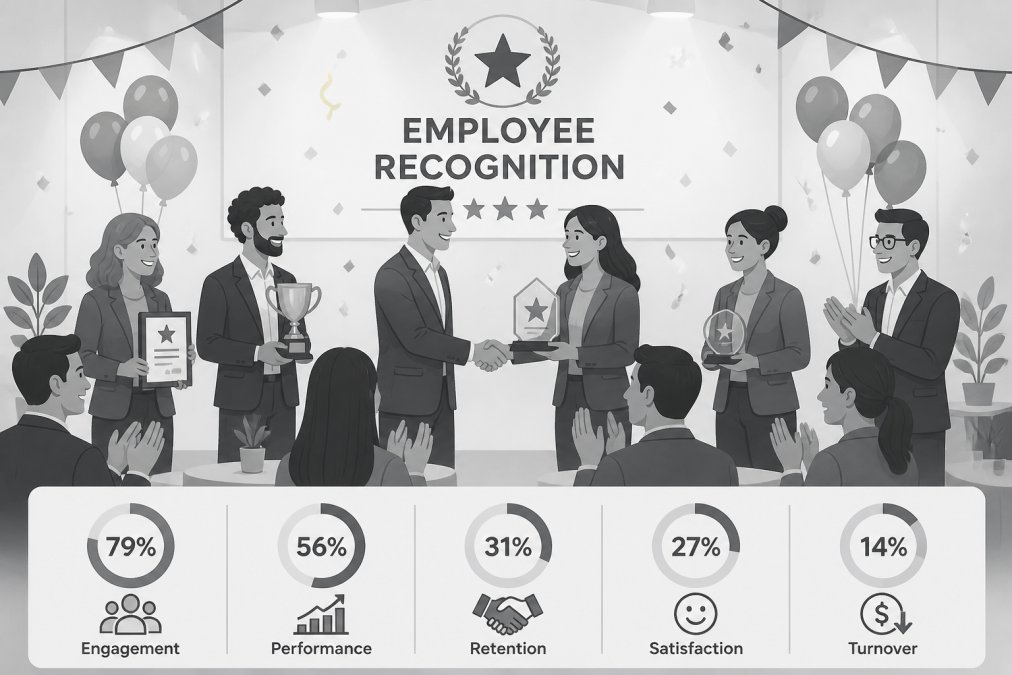
Consistency matters more than frequency. A recognition program that happens quarterly without fail beats one that happens randomly. Build recognition into your calendar. Mark service anniversaries in advance. Schedule quarterly recognition ceremonies. Consistency creates expectation and reinforces that achievement is valued.
Communicate the program clearly. Share your program goals, criteria, and timeline with your entire team. Explain how to nominate colleagues. Celebrate recognized employees publicly in team meetings, newsletters, or all-hands gatherings. The public acknowledgment is often more valuable than the physical award.
Make recognition public. Announcing recognition in private is polite. Announcing it in front of the team is powerful. Public recognition reinforces the behavior you're celebrating and shows the entire organization what you value.
Tie recognition to your strategic priorities. If your organization is pushing toward better customer service, recognize employees who exemplify that. If you're driving innovation, celebrate people who take smart risks. Your recognition program should reinforce the direction you're moving.
Blend award types. Using the same award for every recognition gets stale. Rotate between plaques, crystal awards, personalized desk items, and certificates. Different award types signal that different achievements matter in different ways.
Ensure inclusivity. Recognition programs can accidentally exclude people. Remote employees might miss public ceremonies. Employees in support roles might be overlooked. Think about how your program reaches everyone. Consider virtual recognition moments for distributed teams. Create multiple pathways for recognition so different types of contributions are valued.
Follow up on the impact. After someone receives an award, check in with them. Ask how it felt. Did it motivate them? Use this feedback to refine your program.
Budget Allocation and Award Selection Strategy
Budget constraints are real. The key is allocating your recognition budget strategically so every dollar reinforces your culture.
Start by determining your total annual recognition budget. This should include the cost of awards, engraving, ceremony costs, and associated logistics. Many organizations budget between one and three percent of total payroll for recognition initiatives, though this varies based on company size and priorities.
Next, allocate your budget across recognition categories. How much for service anniversaries? How much for quarterly performance recognition? How much for spot recognition of core values alignment? This allocation should reflect your strategic priorities. If retention is your biggest challenge, invest more in service anniversary recognition. If cultural transformation is your goal, emphasize values-based recognition.
Within each category, decide on award tiers. For service anniversaries, you might allocate a modest budget for five-year awards, a moderate budget for ten-year awards, and a premium budget for twenty-year awards. This tiering signals progression and makes long tenure feel genuinely special.
Quality matters more than quantity. A small number of genuinely excellent awards creates more impact than many mediocre ones. Better to give five premium engraved crystal awards than fifty cheap plastic trophies.
When selecting specific awards, balance aesthetics with durability. The award should look professional and attractive, but also hold up over time. Engraved plaques are timeless. Crystal awards feel premium. Personalized desk items blend recognition with utility.
Gino's Awards, Inc. helps organizations navigate this budgeting challenge. Because we manufacture in-house at our Cleveland facility and offer free personalization, we deliver superior quality without middleman markup. Our fast turnaround means you're not paying rush fees. Our free shipping on orders over $50 reduces logistics costs. We work with your budget to find the right award mix that maximizes impact.
Conclusion
Choosing the right employee appreciation awards is about creating permanent recognition that reinforces your culture, motivates your team, and shows people that their contributions matter.
When you align your awards with your core values, invest in quality materials, and personalize every engraving, you're sending a clear message: this organization takes recognition seriously. That message drives retention, strengthens workplace culture, and builds the kind of team that goes the extra mile.
At Gino's Awards, Inc., we've been helping organizations do this for over 75 years. Our family-owned business manufactures custom awards, engraved plaques, and recognition solutions right here in Cleveland using top-shelf materials and meticulous craftsmanship. We handle your personalization in-house, deliver fast turnaround times, and stand behind every award we create. When you're ready to build a recognition program that actually sticks, call us at (216) 831-6565 or visit our site to discuss your needs. Let's create awards that your team will treasure for years to come.
Frequently Asked Questions
What are some examples of employee appreciation awards?
Common employee appreciation awards include engraved crystal plaques, service anniversary awards, personalized trophies, and branded desk items. The best choice depends on your recognition program's focus. Years-of-service milestones often call for elegant crystal or engraved plaques, while achievement-based recognition might use custom trophies or branded merchandise. Peer-to-peer recognition programs sometimes use smaller, portable awards. Your award should reflect your company values and the specific achievement being recognized.
How do you choose an award that fits your company culture?
Start by identifying what your organization values most: innovation, teamwork, customer service, or leadership. Then select awards that visually and functionally reinforce those values. A tech startup might prefer sleek, modern designs, while a traditional firm might choose classic crystal or marble awards. Consider whether your culture is formal or casual, and whether employees prefer individual recognition or team-based acknowledgment. The award's presentation method matters too, public ceremonies suit some cultures better than private recognition.
What should employee appreciation award wording include?
Effective award wording includes the employee's name, the specific achievement or milestone, the date, and your company name. Go beyond generic phrases, reference the actual impact they made. For example: 'In recognition of five years of dedicated service and exceptional customer relationships' is stronger than 'Employee of the Year.' Include your company's core values if possible. Keep engraving concise so it reads clearly on the award. Personalized wording makes the award meaningful and reinforces the behavioral reinforcement you're aiming for.
How often should you give out employee appreciation awards?
Recognition frequency depends on your program structure. Service anniversary awards typically happen annually on the employee's work anniversary. Achievement-based recognition works best when tied to specific milestones or quarterly performance reviews. Most organizations find that recognizing 15-25% of their workforce annually maintains morale without diluting the award's impact. Peer-to-peer recognition can happen monthly or quarterly. The key is consistency, establish a clear schedule so employees know when and why recognition happens, which strengthens the connection between behavior and reward.
This article was written using GrandRanker