


Tips for Planning Corporate Award Ceremonies: A Complete Guide
Table of Contents
- Define Your Event Objectives and Goals
- Budget Planning and Allocation for Your Ceremony
- Create a Corporate Award Ceremony Agenda Template
- How Long Should an Awards Ceremony Last
- Select Your Venue and Handle Event Logistics
- Employee Recognition Event Ideas and Award Categories
- Best Practices for Employee Awards and Recognition Programs
- Key Tips for Planning Corporate Award Ceremonies That Engage
Tips for Planning Corporate Award Ceremonies: A Complete Guide
Last Updated: August 4, 2026
Planning a corporate award ceremony requires strategic thinking across multiple interconnected decisions. When Gino's Awards, Inc. works with HR teams and event coordinators, we see organizations that invest time in intentional planning deliver ceremonies that genuinely move employees, strengthen culture, and create lasting recognition moments. This guide covers essential tips for planning corporate award ceremonies that engage your team, from defining objectives to managing logistics and measuring impact.
Define Your Event Objectives and Goals
Before booking a venue or designing award categories, answer this: What do you actually want to accomplish?

Without clear objectives, every downstream decision becomes a guess. Start by identifying 2-3 core objectives: recognizing years of service, highlighting exceptional performance, strengthening employee morale, reinforcing company values, or building cross-departmental community. Each objective shapes different choices about venue size, ceremony length, nomination criteria, and tone.
Define success metrics tied to each objective. If your goal is employee morale, measure this through post-event surveys. If you're reinforcing company values, track whether award recipients embody those values.
Budget Planning and Allocation for Your Ceremony
Your budget determines what's possible. Budget planning is less about total spend and more about allocation strategy.
Start with a realistic total budget based on company size and headcount. Allocate your budget across these categories:
Venue and Logistics (30-40%): Rental fees, setup/breakdown, parking, and facility insurance.
Awards and Recognition Items (15-25%): Custom awards and engraved plaques. Quality matters here; cheap-looking awards undermine the ceremony's message. Gino's Awards, Inc. specializes in high-quality custom recognition products with fast turnaround.
Catering and Beverages (20-25%): Food, drinks, and service staff.
Production and Entertainment (10-20%): Audiovisual equipment, lighting, sound system, emcee, music, and special entertainment.
Contingency and Miscellaneous (5-10%): Printing, signage, and unforeseen costs.
Avoid underfunding production while overspending on catering. Request quotes early from vendors. For awards, lead time matters. Gino's Awards, Inc. offers quick turnaround and free personalization, reducing overall timeline stress.
Create a Corporate Award Ceremony Agenda Template
A written agenda is your operational blueprint. Without one, your ceremony drifts.
Structuring Your Ceremony Flow
Your agenda should account for every minute from doors open to final remarks:
Pre-Ceremony (15-30 minutes before start): Doors open, attendees arrive, light appetizers or drinks, informal networking.
Opening Remarks (5-10 minutes): CEO or senior leader welcomes attendees and sets the emotional tone.
Award Presentation Blocks (45-75 minutes): Present awards in logical groupings by category, department, or level. Each presentation should introduce the award category, read key accomplishments, call the recipient to stage, present the award, and take a photo.
Entertainment or Special Moment (5-15 minutes optional): A video montage, live performance, or special recognition that adds emotional resonance.
Closing Remarks (5-10 minutes): Final message from leadership and transition to post-ceremony celebration.
Post-Ceremony (30-60 minutes): Networking, photos with award recipients, food and drinks.
Timing and Pacing Considerations
Budget approximately 3-5 minutes per award presentation. For a 25-person recognition event, that's roughly 75-175 minutes just for presentations.
Build in 2-minute buffer time between segments. Test your timing during rehearsal. Have your emcee read scripts at actual pace and practice transitions. Most planners discover they're 10-15 minutes over when they rehearse; better to find this now than during the live event.
How Long Should an Awards Ceremony Last?
The optimal length for a corporate award ceremony is 90-120 minutes total, including pre-ceremony mingling and post-ceremony celebration. The formal program itself should run 60-90 minutes.
Anything under 60 minutes feels rushed. Anything over 120 minutes tests attendee patience. If recognizing 100+ employees, consider breaking the ceremony into two sessions or running multiple shorter ceremonies throughout the year.
For hybrid or virtual ceremonies, shorten the total runtime by 20-30%. Virtual attendees tolerate shorter formats better, and technical fatigue is real.
Select Your Venue and Handle Event Logistics
Your venue is the physical container for your ceremony. The right venue supports your objectives; the wrong one undermines them.
Start by identifying your headcount. Consider layout flexibility for a stage or presentation area, seating, a cocktail or mingling area, and ideally a photo backdrop.
Visit potential venues in person. Walk to the back of the room and listen to someone speak from the stage. Can you hear clearly? Check for adequate parking, setup time allowances, catering restrictions, and what's included in the rental versus what you need to bring in.
Confirm the venue's experience with corporate events. A venue regularly hosting award ceremonies has systems in place for stage setup, microphone testing, and technical support.
Venue Acoustics and Audiovisual Requirements
Poor audio quality ruins ceremonies. At minimum, you need a quality microphone for your emcee, adequate amplification for the entire room, a backup microphone, and speakers positioned to cover all areas without feedback.
Test the audio system during rehearsal, not during the live event. For audiovisual elements, confirm the venue has a projector and screen visible from every seat. Test video playback on the actual equipment.
Accessibility and Inclusivity Standards
An awards ceremony should be accessible to all employees. Ensure your venue is physically accessible with wheelchair-accessible entrances, parking, and restrooms. If your stage is elevated, provide a ramp.
Provide live captioning or CART (Communication Access Realtime Translation) for attendees who are deaf or hard of hearing. For virtual or hybrid ceremonies, captions are non-negotiable.
Ensure your emcee pronounces names correctly. Provide a pronunciation guide and allow practice time. Offer vegetarian, vegan, and gluten-free catering options.
Employee Recognition Event Ideas and Award Categories
Award categories should align with your organizational values and strategic priorities. Specific categories tied to your culture feel meaningful.
Consider categories like:
- Values in Action: Exemplifies core company values
- Innovation and Problem-Solving: Creative solutions to business challenges
- Customer Impact: Went above and beyond for customers
- Collaboration and Teamwork: Cross-functional partnership
- Leadership Development: Emerging leaders or mentorship
- Years of Service: Tenure milestones (5, 10, 15, 20+ years)
- Diversity and Inclusion: Efforts to build inclusive culture
- Safety and Wellness: Commitment to workplace safety or wellness
The number of categories depends on organization size. A 50-person company might have 5-7 categories; a 500-person company might have 10-15.
Designing Your Nomination Process
Open nominations to all employees at least 4-6 weeks before your ceremony. Create a simple online form asking who they're nominating, why, which award category applies, what specific example demonstrates this, and how this person has impacted the organization.
Require nominators to provide specific examples, not generic praise. "John is a great team player" is weak. "John spent three weeks helping our customer success team rebuild their database after a system failure, working evenings and weekends without being asked" is strong.
Form a selection committee of 3-5 people representing different departments and levels. For years-of-service awards, pull tenure data and recognize milestones. Keep the selection process confidential until the ceremony.
Best Practices for Employee Awards and Recognition Programs
A single ceremony is a moment. A recognition program is ongoing culture. The best ceremonies sit within a larger recognition strategy.
Throughout the year, celebrate wins in real time. When someone does something noteworthy, acknowledge it immediately in team meetings and company communications. Train managers to recognize their teams consistently and connect recognition to your company values.
Quality, Personalization, and Presentation
The quality of your awards matters. Cheap-looking awards undermine your message. Gino's Awards, Inc. specializes in high-quality custom awards and engraved plaques made in the USA. With free personalization and fast turnaround, each award is specifically engraved with the recipient's name, award category, and date, making it a keepsake rather than a generic trophy.
During the ceremony, read the nomination story or key accomplishments of each recipient. Have a professional emcee introduce each award with genuine enthusiasm and correct name pronunciation. Consider creating a photo moment with recipients posing with their award for professional photos shared in company communications afterward.
Key Tips for Planning Corporate Award Ceremonies That Engage
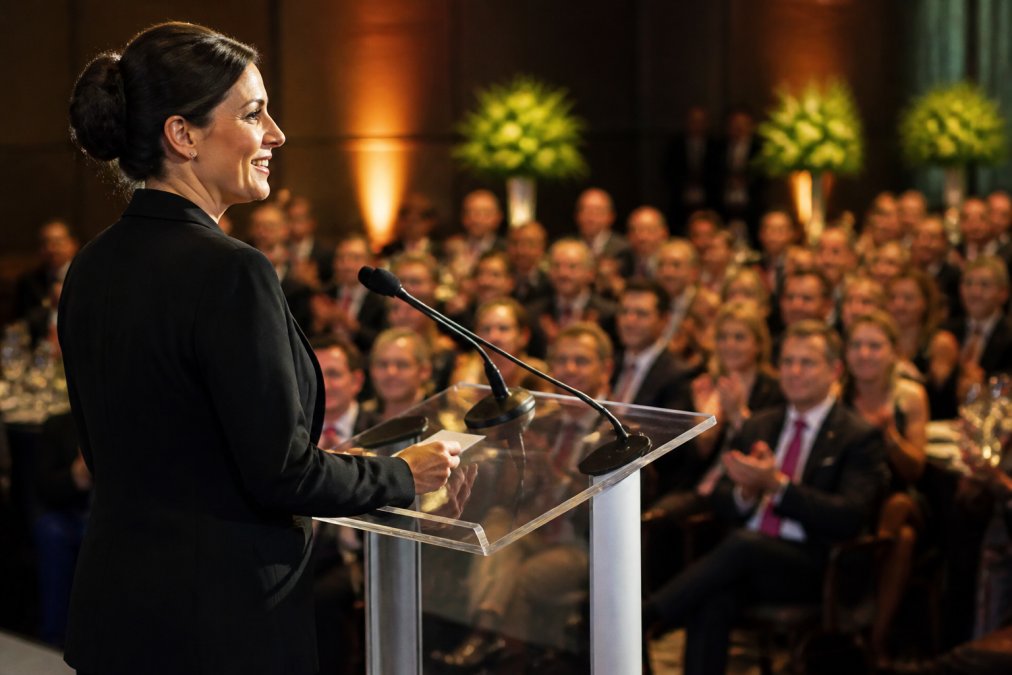
The difference between a ceremony people attend and one people remember comes down to engagement. Attendees need to feel invested in the outcomes, not like passive observers.
Theme, Entertainment, and Guest Experience
A unifying theme creates coherence and makes your ceremony feel intentional. Themes might include "Celebrating Our Values," "Building Our Future," "Together We Thrive," or "Milestones and Moments." Your theme influences décor, music selection, video content, and script tone.
Entertainment breaks up the rhythm and adds emotional resonance. This might include a video montage of award recipients, live music, a special guest speaker, or an interactive element. Keep entertainment brief, 5-15 minutes maximum.
Guest experience begins before the ceremony starts. When attendees arrive, do they feel welcomed? Is there something to drink or eat? After the ceremony, facilitate connection through a photo backdrop and cocktail hour.
Emcee Selection and Scriptwriting
Your emcee sets the tone for the entire ceremony. Choose someone comfortable speaking, genuinely enthusiastic about recognizing people, and able to read a room and adjust pacing.
Write scripts in advance but allow flexibility in delivery. Provide key information, award names, recipient names with pronunciation guides, and award descriptions. Train your emcee during rehearsal, having them practice reading scripts at actual pace. Provide brief background on each award recipient to allow personal touches.
Hybrid and Virtual Ceremony Logistics
For hybrid ceremonies, ensure your camera angle captures the stage clearly. Position the camera at eye level with the emcee and award recipients. Test video quality on the actual streaming platform.
Provide multiple ways for virtual attendees to participate. Send clear instructions on how to join, what time the ceremony starts, and how they can see award recipients clearly.
For award recipients joining virtually, decide in advance whether they'll accept their award on camera or if a manager will accept on their behalf. Virtual ceremonies require tighter pacing than in-person events. Aim for 60-75 minutes total with more frequent transitions between speakers. Test all technology 30 minutes before the ceremony starts.
Sustainability and Eco-Friendly Planning
Growing numbers of organizations prioritize sustainability in event planning. For awards, choose sustainable materials. Gino's Awards, Inc. uses quality materials that create lasting keepsakes; a high-quality award kept for decades has far less environmental impact than a cheap trophy ending up in a landfill.
For catering, source locally when possible and minimize food waste. Avoid single-use plastics; use reusable plates, cups, and utensils. For printing, use recycled paper and minimize quantities. For décor, choose reusable elements over single-use decorations.
Planning a corporate award ceremony that genuinely engages your team requires attention to dozens of details, from defining clear objectives to managing logistics to creating moments of authentic celebration. The payoff is significant: employees who feel genuinely recognized are more engaged, more loyal, and more likely to embody your company values.
When sourcing your awards and recognition items, Gino's Awards, Inc. brings nearly 75 years of experience creating high-quality, personalized recognition products. With fast turnaround times, free personalization, and superior craftsmanship made in the USA, Gino's Awards, Inc. ensures your recognition items look and feel premium, reinforcing that the people you're honoring truly matter. Call Gino's Awards, Inc. at 216-831-6565 to discuss your ceremony needs and get a quote on custom awards that your team will treasure.
| Planning Element | Timeline | Key Deliverable |
|---|---|---|
| Define objectives and goals | 8-10 weeks before | Written objectives and success metrics |
| Budget planning and allocation | 8-10 weeks before | Detailed budget breakdown by category |
| Venue selection and booking | 8-10 weeks before | Signed venue contract with logistics confirmed |
| Award categories and criteria | 6-8 weeks before | Finalized categories shared with organization |
| Nomination period | 6-8 weeks before (opens) | All nominations received and compiled |
| Selection committee review | 4-6 weeks before | Award recipients finalized and notified |
| Emcee and entertainment booking | 6-8 weeks before | Confirmations and contract signed |
| Catering and logistics finalization | 4-6 weeks before | Menu confirmed, headcount locked |
| Awards customization and engraving | 4-6 weeks before | Custom awards delivered and inspected |
| Script writing and rehearsal | 2-4 weeks before | Final scripts approved, emcee rehearsed |
| Technical testing and setup | 1 week before | Audio, video, and streaming tested |
| Final walkthrough and adjustments | 2-3 days before | All systems confirmed, contingencies in place |
Frequently Asked Questions
What should be included in a corporate award ceremony agenda?
A solid corporate award ceremony agenda balances structure with engagement. Start with welcome remarks and context about your recognition program. Include award categories with clear presentation of nominees and winners. Build in time for audience applause and photo opportunities. Add entertainment or team building moments between award segments to maintain energy. Close with remarks from leadership and a final celebration moment. Allocate roughly 2-3 minutes per award category, depending on how many recipients you're honoring.
How long should a corporate awards ceremony actually last to keep employees engaged?
Most corporate awards ceremonies work best between 60 and 90 minutes. Anything under 45 minutes feels rushed and undervalues the honorees. Beyond 90 minutes, employee attention typically drops and the event loses impact. The actual length depends on your award categories and attendee count. A ceremony recognizing 10-15 people usually runs 60-75 minutes comfortably. If you're recognizing 25+ people, aim for 75-90 minutes but break the program into segments with entertainment or interactive moments to maintain energy and prevent fatigue.
What makes employee recognition awards feel premium and meaningful in person?
Quality materials make the biggest difference. Custom engraved plaques, trophies, or certificates in solid materials like marble, wood, or metal feel substantial and valuable compared to cheap alternatives. Personalization matters enormously, include the recipient's name, achievement, date, and company logo. Presentation counts too: present each award individually, read a brief citation, and allow time for applause and photos. Pair the physical award with public recognition during the ceremony. When recipients see their names engraved professionally and receive genuine acknowledgment from leadership, the award becomes a lasting symbol of achievement rather than just office decoration.
Can we hold a hybrid corporate awards ceremony, and what do we need to plan differently?
Yes, hybrid ceremonies are increasingly common and feasible. You'll need reliable videoconferencing technology that displays both in-person and remote attendees clearly. Set up a high-quality camera and microphone at the venue so remote participants can see and hear everything. Test all audiovisual equipment 24 hours before the event. For award presentations, have remote winners join via video call so they can be recognized live. Consider sending physical awards to remote employees before or after the ceremony so they have something tangible. Engagement matters more in hybrid settings, keep the program tighter, use chat features for remote interaction, and follow up with recorded highlights for those who couldn't attend live.
How do we measure whether our corporate award ceremony was successful?
Track key performance indicators before, during, and after the event. Before: measure employee awareness of the recognition program through surveys. During: note attendance rates and engagement (photos taken, social media mentions, applause levels). After: send a post-event survey asking about satisfaction, whether employees felt valued, and if the ceremony reinforced company culture. Monitor employee retention and morale in the weeks following the ceremony. Check internal communication channels for positive mentions. Calculate return on investment by comparing ceremony costs against improvements in employee retention, engagement scores, and internal promotion rates. Strong ceremonies typically show measurable increases in employee morale within 30 days.
This article was written using GrandRanker