


What Is an Engraved Tag and Its Everyday Value
Every American business faces the challenge of keeping assets clearly labeled and information easy to find. Studies show that reliable tag systems can reduce identification errors by over 60 percent in busy environments. Whether in manufacturing, healthcare, or schools, engraved tags deliver precise and lasting solutions for organizing spaces and equipment. Discover how these finely crafted markers help American organizations manage risks, improve efficiency, and maintain clarity no matter the environment.
Table of Contents
- Defining Engraved Tags And Common Uses
- Types Of Engraved Tags And Materials
- How Custom Engraving Works
- Practical Applications Across Industries
- Mistakes To Avoid When Ordering
Key Takeaways
| Point | Details |
|---|---|
| Engraved Tags Provide Durability | Engraved tags are made from materials like metal and plastic that ensure legibility under harsh conditions, making them ideal for both industrial and personal use. |
| Material Selection is Critical | Choose tag materials based on environmental factors such as chemical exposure and temperature to ensure lasting performance. |
| Custom Engraving Requires Precision | It is essential to have an accurate digital proof before engraving to avoid costly mistakes and ensure the tag meets expectations. |
| Professional Consultation is Advisable | Consulting with experts can help navigate material choices and design specifications to prevent errors in the final product. |
Defining Engraved Tags and Common Uses
Engraved tags represent precision-crafted identification labels created by permanently etching information onto durable materials like metal or plastic. These specialized identification markers serve critical functions across numerous professional and personal environments, offering a reliable method for marking assets, providing instructions, and maintaining organizational clarity.
Industrial and commercial facilities extensively utilize metal engraved tags for clear, long-lasting labeling. These robust identification solutions are particularly valuable in settings requiring permanent, resistant marking systems. Common applications include equipment tracking, safety instruction display, inventory management, and asset documentation. The durability of engraved tags ensures information remains legible and intact even in challenging environmental conditions.
Engraved tags come in diverse materials and styles, each designed for specific purposes. Metal tags offer exceptional weather resistance and strength, making them ideal for outdoor industrial equipment. Plastic tags provide lightweight versatility and cost-effectiveness for indoor applications. Typical materials include stainless steel, aluminum, brass, and high-grade polymers. Organizations select tag materials based on specific environmental requirements, expected wear and tear, and budget constraints.
Pro Tip: Choose an engraving material that matches your specific usage environment. Consider factors like temperature exposure, potential chemical interactions, and expected physical stress when selecting your tag’s base material.
Types of Engraved Tags and Materials
Engraved tags represent a versatile identification solution with an impressive range of material options tailored to specific environmental and functional requirements. Manufacturers offer multiple material choices that provide unique characteristics for different applications, ensuring organizations can select the most appropriate tag for their specific needs.
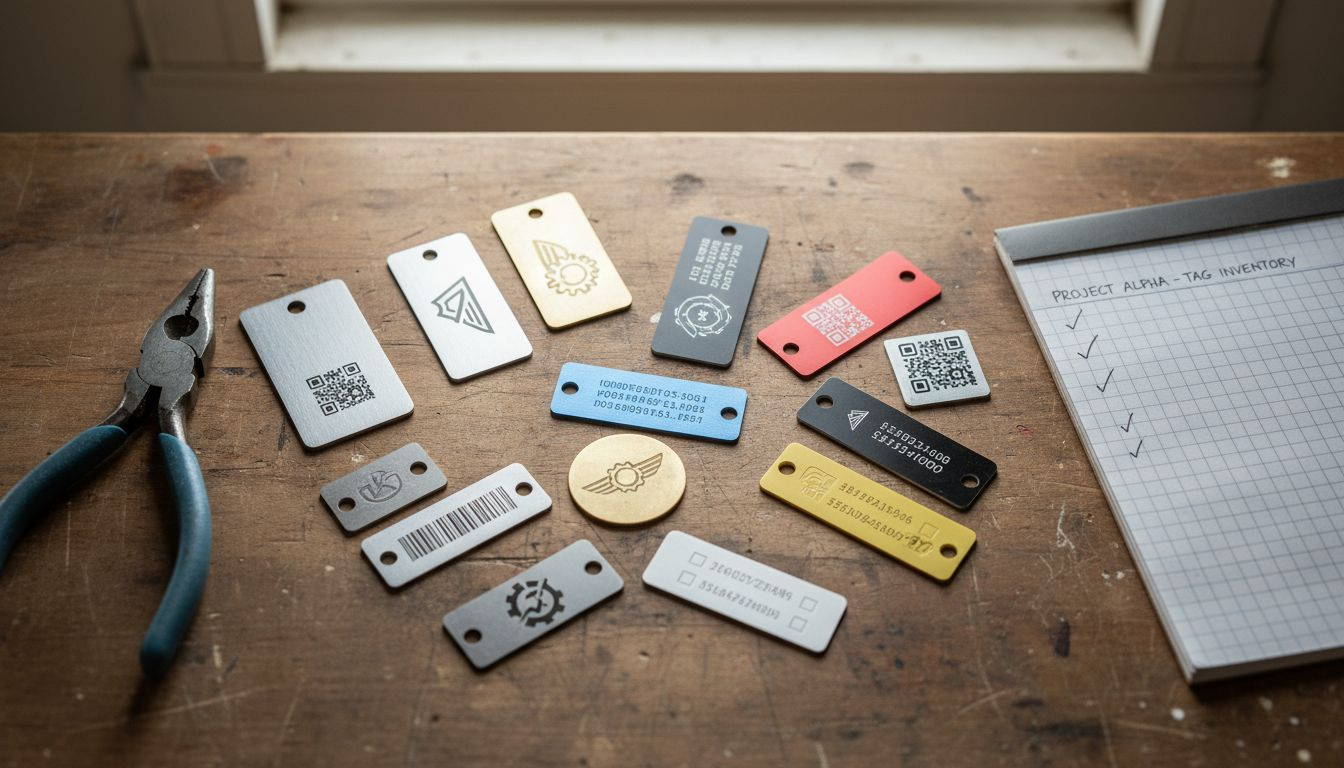
Among the most popular materials, anodized aluminum stands out for its exceptional lightweight properties and superior corrosion resistance. Brass, stainless steel, and specialized plastics like Traffolyte offer complementary characteristics that address diverse marking requirements. Stainless steel tags provide unmatched durability and strength, making them ideal for harsh industrial environments. Brass tags deliver a classic aesthetic and moderate resilience, often preferred in professional settings that prioritize visual appeal alongside functionality.
The selection of engraved tag material depends on several critical factors, including environmental exposure, expected wear and tear, budget constraints, and specific identification requirements. Outdoor applications typically demand materials with high weather resistance like stainless steel or treated aluminum. Indoor environments might prioritize cost-effectiveness and aesthetic considerations, allowing for more flexible material choices such as lightweight plastics or decorative metals. Some advanced materials like ABET Hard Laminate provide multilayered construction that enables high-contrast engravings and enhanced durability.
Pro Tip: Match your material selection to the tag’s intended environment by conducting a comprehensive assessment of temperature ranges, potential chemical exposures, and expected mechanical stress before making a final decision.
Here is a comparison of popular engraved tag materials and their ideal uses:
| Material | Key Benefits | Typical Environments |
|---|---|---|
| Stainless Steel | Superior durability, corrosion resistance | Industrial, outdoor, harsh conditions |
| Anodized Aluminum | Lightweight, resists rust | Equipment labeling, light-duty outdoor |
| Brass | Distinct appearance, moderate strength | Offices, decorative, moderate exposure |
| High-Grade Plastic | Cost-effective, lightweight | Indoor, low-stress, color coding |
| ABET Hard Laminate | High-contrast, layered durability | Laboratories, complex visual needs |
How Custom Engraving Works
Custom engraving represents a sophisticated process that transforms digital designs into permanent, precision-marked identification solutions. The journey begins with meticulously crafting a digital template that defines every aspect of the final product, including text layout, font selection, and potential decorative elements. This initial design phase is crucial, as it serves as the blueprint for the entire engraving process.
Engraving techniques vary depending on the material and desired outcome. Metal and plastic materials can be marked using rotary cutters or advanced laser technologies, each method offering unique advantages. Rotary engraving involves physically cutting into the material’s surface to a specific depth, creating tactile and visually distinct markings. Laser engraving, by contrast, utilizes high-intensity heat to vaporize the surface, producing extremely precise and permanent identifications with remarkable detail and consistency.
The technical complexity of custom engraving requires specialized equipment and expert skills. Professional engravers must understand material properties, have precise technical knowledge of their tools, and possess an artistic sensibility to ensure the final product meets exact specifications. Factors like material thickness, surface texture, intended usage environment, and aesthetic requirements all influence the selection of the most appropriate engraving technique. Some advanced systems even integrate computer-aided design (CAD) software to ensure millimeter-perfect accuracy and repeatability.
Pro Tip: Always request a digital proof before final engraving to verify design placement, spelling, and overall visual composition, preventing costly mistakes and ensuring your custom tag meets exact expectations.
Practical Applications Across Industries
Engraved tags serve as critical identification solutions across numerous professional sectors, providing robust and enduring marking systems that meet diverse organizational needs. Manufacturing, healthcare, utilities, and industrial environments rely extensively on these precision-engineered identification tools to streamline operations, ensure safety, and maintain comprehensive asset tracking.
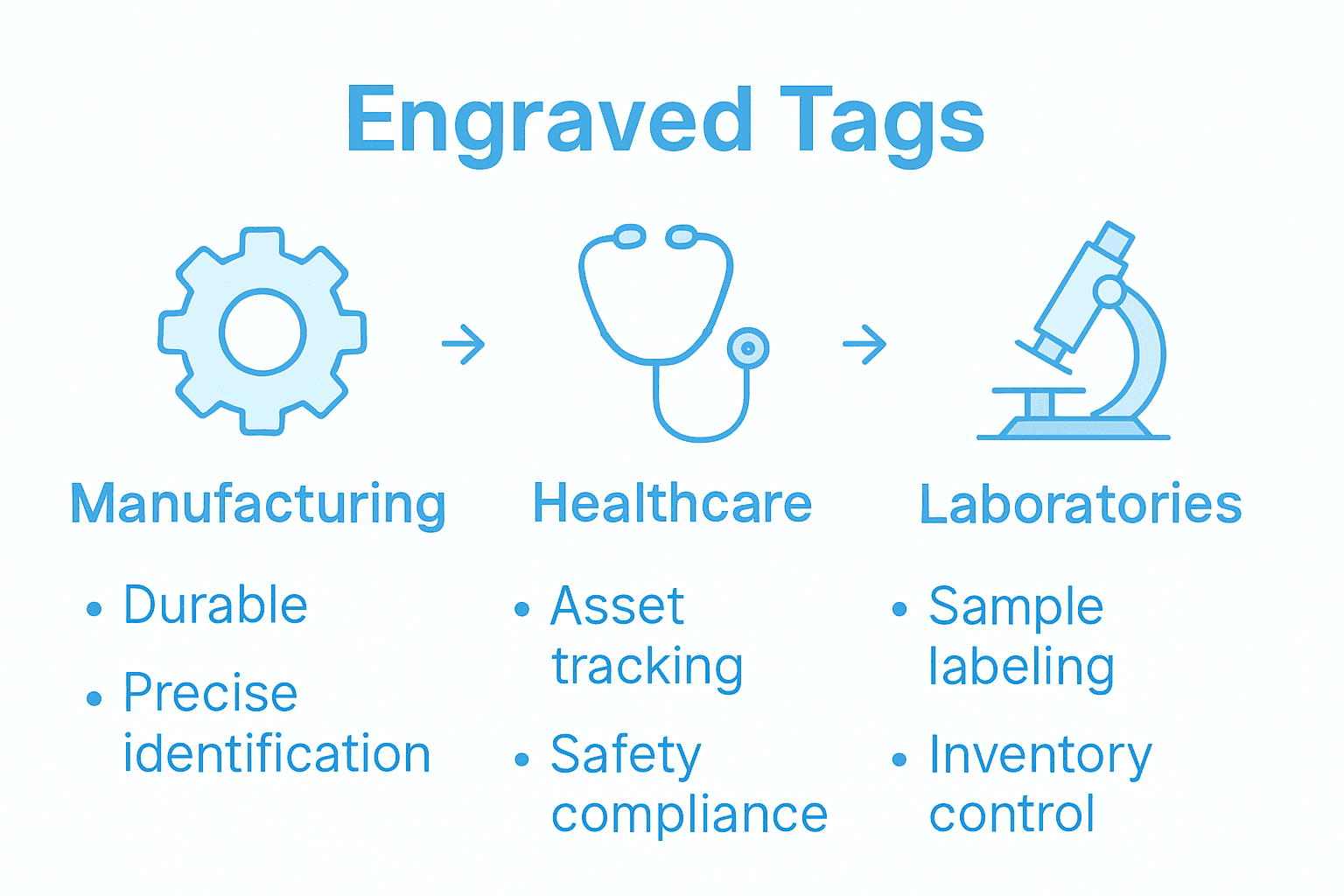
In manufacturing and industrial settings, engraved tags play a pivotal role in equipment identification, maintenance tracking, and safety communication. Safety signage and asset labeling represent key applications for durable engraved tags that can withstand extreme environmental conditions. These tags communicate critical information such as maintenance schedules, operational warnings, equipment specifications, and compliance details. Specialized tags in chemical processing plants, automotive factories, and aerospace facilities must endure temperature fluctuations, chemical exposures, and mechanical stress while maintaining legibility.
Beyond industrial contexts, engraved tags find extensive applications in healthcare, research laboratories, government facilities, and educational institutions. Medical equipment tracking, laboratory sample identification, security access control, and inventory management all benefit from the precision and permanence of custom engraved tags. Advanced materials and engraving techniques enable the creation of tags that meet stringent regulatory requirements, resist sterilization processes, and provide tamper-evident identification solutions across sensitive professional environments.
Pro Tip: Always consider the specific environmental challenges of your intended application when selecting engraved tag materials, ensuring the tag’s durability matches the operational conditions it will encounter.
Mistakes to Avoid When Ordering
Ordering engraved tags requires careful consideration of multiple critical factors to ensure the final product meets your specific organizational needs. The most common pitfall is approaching the ordering process without a comprehensive understanding of your precise requirements, which can lead to costly mistakes and ineffective identification solutions.
One of the most significant errors organizations make is selecting inappropriate materials for their specific environmental conditions. Material selection is not a one-size-fits-all proposition. Different environments demand specialized materials that can withstand unique challenges such as extreme temperatures, chemical exposures, mechanical stress, and prolonged outdoor or industrial use. Stainless steel might be ideal for harsh industrial settings, while anodized aluminum could work better for lightweight, corrosion-resistant applications. Choosing the wrong material can result in premature tag degradation, reduced legibility, and ultimately, ineffective identification.
Additional critical mistakes include overlooking precise information accuracy, failing to specify exact dimensions, and neglecting to provide clear design specifications. Inaccurate valve numbers, imprecise location details, or incomplete functional descriptions can compromise the tag’s primary purpose of clear communication. Many organizations also underestimate the importance of consulting with engraving professionals who can provide expert guidance on material selection, design optimization, and potential environmental challenges specific to their industry.
Pro Tip: Always request a detailed digital proof before final production, carefully reviewing every detail of text placement, font size, material specification, and overall design to prevent costly reprinting and ensure your engraved tags meet exact organizational requirements.
This table summarizes key factors influencing successful custom engraving decisions:
| Decision Factor | Why It Matters | Potential Consequence of Neglect |
|---|---|---|
| Accurate Design Proof | Ensures correct information and layout | Costly reprinting, communication errors |
| Material Appropriateness | Matches durability to environment | Premature wear, illegible tags |
| Correct Dimensions | Guarantees proper fit and visibility | Improper attachment, wasted resources |
| Professional Consultation | Leverages expert advice | Overlooked risks, suboptimal choices |
Discover the Power of Lasting Identification with Custom Engraved Tags
The article highlights common challenges like selecting the right materials for durability and ensuring precision in engraving to maintain clear, permanent identification across industries. If you have faced uncertainty about material choices or the need for perfectly accurate, professional custom tags, Gino’s Awards Inc. offers tailored solutions designed to meet these exact needs. From stainless steel to anodized aluminum engraved name tags, our range supports every environment and use case.
Bring your engraved tags to life with Gino’s easy-to-customize awards and plaques at https://ginosonline.com. Act now to benefit from fast shipping and free personalization, ensuring your tags provide reliable identification and lasting value. Explore our selection and order your perfect engraved identification solutions today at Custom Awards and Recognition.
You can also visit the custom plates collection for versatile options that help you clearly communicate important information with style and durability.
Frequently Asked Questions
What materials are commonly used for engraved tags?
Engraved tags are typically made from materials like stainless steel, anodized aluminum, brass, high-grade plastics, and ABET Hard Laminate. Each material has unique benefits tailored for specific applications and environments.
How does the custom engraving process work?
The custom engraving process involves creating a digital template that defines the design, text layout, and decorative elements. Engraving techniques such as rotary cutting and laser engraving are used to etch the information into the material, providing permanent identification.
What are the main applications of engraved tags in various industries?
Engraved tags are used in a variety of industries, including manufacturing for equipment tracking and safety communication, healthcare for medical equipment identification, and laboratories for sample labeling, ensuring precise and permanent identification across diverse environments.
How can I choose the right engraved tag material for my needs?
When selecting an engraved tag material, consider factors like environmental exposure, durability requirements, budget constraints, and the intended use of the tag. For example, outdoor environments may require weather-resistant materials like stainless steel, while indoor applications might prioritize cost-effectiveness with lighter plastics.
Recommended
- Engraved Name Tags: Everything You Need to Know – Gino’s Awards, Inc.
- What Is an Engraved Plate? Complete Overview – Gino’s Awards, Inc.
- What Is Trophy Engraving? Complete Expert Guide – Gino’s Awards, Inc.
- The Power of Personalized Engraved Items. Here’s a short list of reaso – Gino’s Awards, Inc.
- Understanding Why Choose Designer Dresses for Your Event - DressMeUpNY