



What Is a Corporate Gift and Why It Matters
Over eighty percent of American companies now prioritize personalized gifts for employee recognition and client appreciation. Corporate event planners face a growing expectation for thoughtful, high-quality customized awards that reflect both professionalism and genuine gratitude. With strategic gifting playing a key role in shaping workplace culture and client loyalty across the United States, this guide reveals the essential factors in selecting memorable, impactful corporate gifts.
Table of Contents
- Defining Corporate Gifts In Business Settings
- Types Of Corporate Gifts For U.S. Companies
- How Customization Enhances Gift Impact
- Tax Rules And Legal Compliance For Corporate Gifts
- Avoiding Common Corporate Gifting Pitfalls
Key Takeaways
| Point | Details |
|---|---|
| Importance of Corporate Gifts | Corporate gifts are strategic tools used to strengthen professional relationships and demonstrate appreciation within business settings. |
| Types of Corporate Gifts | U.S. companies utilize diverse types of corporate gifts, including employee recognition awards and charitable donations, to reinforce values and culture. |
| Customization Enhances Impact | Tailoring gifts to individual recipients fosters deeper connections and reflects thoughtful engagement, increasing the perceived value. |
| Tax Compliance is Essential | Organizations must understand IRS guidelines and maintain accurate records to avoid tax complications related to corporate gifting. |
Defining Corporate Gifts in Business Settings
Corporate gifts represent strategic tools organizations use to build relationships, enhance communication, and demonstrate appreciation within professional environments. Unlike standard promotional items, these gifts carry deeper significance in business interactions. At their core, corporate gifts are carefully selected tokens of recognition that serve multiple nuanced purposes beyond simple monetary exchange.
In professional contexts, corporate gifts function as diplomatic instruments designed to affirm business relationships without compromising organizational integrity. These offerings differ critically from performance incentives or standard marketing materials. They represent thoughtful gestures intended to strengthen interpersonal connections while maintaining ethical boundaries. The strategic selection of such gifts requires understanding complex professional dynamics and organizational protocols.
Effective corporate gifts share several key characteristics. They typically demonstrate consideration of the recipient’s professional role and organizational context. High-quality corporate gifts are:
- Appropriate to professional settings
- Tasteful and moderately priced
- Aligned with organizational policies
- Selected to enhance rather than manipulate relationships
- Culturally sensitive and respectful
Pro tip: When selecting corporate gifts, always review your organization’s gift policy and consider the recipient’s professional boundaries to ensure your gesture remains professional and meaningful.
Types of Corporate Gifts for U.S. Companies
Corporate gifts in the United States represent a diverse landscape of strategic recognition tools that companies utilize to strengthen professional relationships, motivate employees, and demonstrate organizational values. Corporate giving programs encompass multiple categories ranging from monetary contributions to nuanced professional gestures that extend beyond simple financial transactions.
These corporate gifts can be broadly classified into several primary categories. Cash-based contributions include direct monetary donations, matching employee charitable contributions, and grants to community organizations. Non-monetary gifts involve equipment donations, professional service provisions, technology transfers, and strategic resource allocations. Some companies also develop sophisticated gift programs that integrate employee volunteerism, sponsorship opportunities, and targeted philanthropic initiatives designed to create meaningful social impact.
The most common types of corporate gifts for U.S. companies include:
- Employee recognition awards
- Performance milestone gifts
- Retirement commemorative items
- Professional development resources
- Charitable donation matching
- Community sponsorship packages
- Professional networking event support
- Technology or equipment donations to educational institutions
Understanding the strategic intent behind corporate gifts is crucial. These offerings are not merely transactional but represent sophisticated relationship-building instruments that communicate organizational culture, values, and commitment to professional excellence.
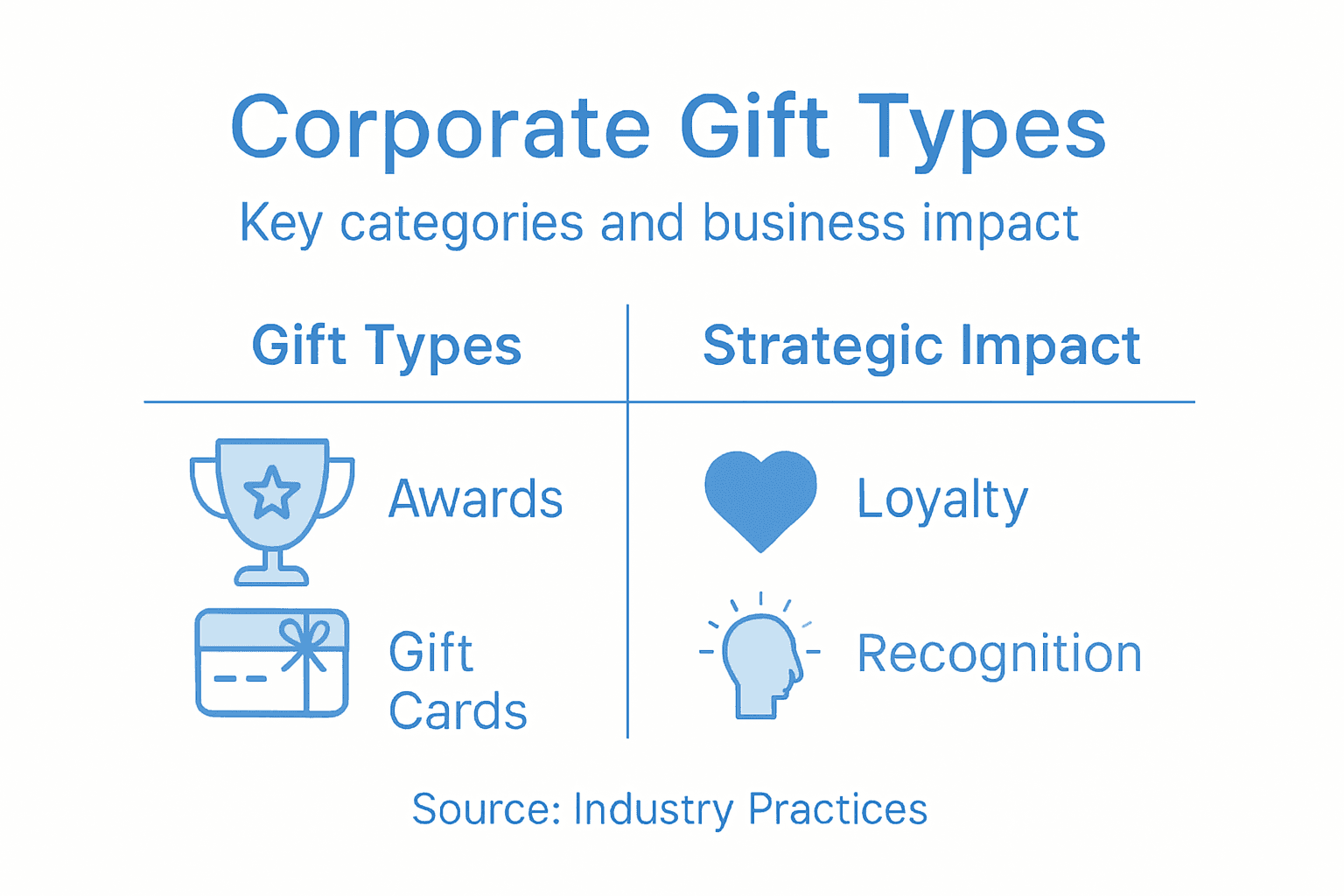
Here’s a comparison of corporate gift categories and their strategic business impact:
| Gift Category | Typical Examples | Strategic Impact |
|---|---|---|
| Monetary | Cash grants, donations | Builds goodwill; supports community |
| Non-monetary | Equipment, services | Enhances reputation; fosters loyalty |
| Event Sponsorship | Networking support | Expands reach; increases brand presence |
| Philanthropic | Volunteer initiatives | Demonstrates values; strengthens culture |
Pro tip: Always align corporate gifts with your organization’s core values and ensure they maintain professional boundaries while demonstrating genuine appreciation.
How Customization Enhances Gift Impact
Customization transforms corporate gifting from a routine transaction into a powerful strategic communication tool. By tailoring gifts to individual recipients, organizations can create deeply meaningful connections that transcend traditional business interactions. Personalization optimizes service configurations by aligning gifts precisely with recipient preferences and organizational objectives.

The strategic value of customized corporate gifts extends far beyond mere aesthetic appeal. These personalized offerings serve multiple critical functions: they demonstrate thoughtful consideration, reinforce professional relationships, and communicate organizational values. When a gift reflects specific knowledge about the recipient—such as their professional achievements, personal interests, or unique contributions—it signals a level of engagement that generic offerings cannot match.
Key advantages of customized corporate gifts include:
- Enhanced emotional connection with recipients
- Increased perceived value of the gift
- Stronger brand recognition
- Improved relationship management
- Higher likelihood of recipient retention
- Nuanced communication of organizational culture
- Potential for data collection on recipient preferences
- Memorable brand interactions
Pro tip: Invest time in understanding individual recipient backgrounds and preferences to create truly impactful customized corporate gifts that resonate on a personal and professional level.
Tax Rules and Legal Compliance for Corporate Gifts
Navigating the complex landscape of tax regulations is crucial for organizations implementing corporate gift programs. Gifts exceeding specific value thresholds can trigger significant tax reporting requirements and potential financial obligations for both the giving organization and the recipient.
The Internal Revenue Service (IRS) establishes precise guidelines for corporate gift taxation, which vary depending on the gift’s nature, value, and recipient. Employee gifts, for instance, are subject to specific scrutiny. Non-cash awards and gifts must be carefully evaluated to determine their taxable status, with different rules applying to tangible property, cash equivalents, and recognition awards. Understanding these nuanced regulations helps organizations avoid unintended tax consequences and maintain compliance.
Key considerations for corporate gift tax compliance include:
- Tracking gift values against annual exclusion limits
- Documenting gift recipients and purposes
- Understanding taxable versus non-taxable gift thresholds
- Differentiating between employee awards and personal gifts
- Maintaining accurate records for potential IRS review
- Considering state-specific gift tax regulations
- Evaluating potential withholding tax requirements
- Consulting with tax professionals for complex scenarios
Pro tip: Consult with a qualified tax professional annually to review your corporate gift program and ensure complete compliance with current IRS regulations.
For quick reference, here are common IRS considerations for corporate gift compliance:
| IRS Rule/Regulation | Business Implication | Recommended Action |
|---|---|---|
| Annual exclusion limits | Limits on untaxed gift amounts | Track all gift values diligently |
| Employee vs. personal gifts | Different tax treatment | Distinguish types before reporting |
| State-specific gift tax rules | Vary across regions | Consult local tax professionals |
| Documentation requirements | Necessary for audits | Maintain thorough gift records |
Avoiding Common Corporate Gifting Pitfalls
Navigating the complex landscape of corporate gifting requires understanding potential ethical and legal risks that can undermine professional relationships. Strict gift policies prevent conflicts of interest and protect organizations from compromising their professional integrity.
Corporate gift exchanges involve numerous potential pitfalls that can damage organizational reputation and create unexpected legal complications. These risks range from unintentional regulatory violations to perceived attempts at improper influence. Professionals must carefully evaluate gift exchanges through multiple lenses, considering ethical standards, legal requirements, and potential perceptions of impropriety before initiating or accepting corporate gifts.
Common corporate gifting pitfalls organizations should avoid include:
- Gifts exceeding regulatory value thresholds
- Offering conditioned gifts tied to business outcomes
- Creating potential conflicts of interest
- Inconsistent gift distribution among employees
- Failing to document gift exchanges
- Neglecting organizational gift policy guidelines
- Providing gifts to decision makers during active negotiations
- Overlooking cultural sensitivities in gift selection
Pro tip: Develop a comprehensive written gift policy that clearly outlines acceptable gift values, recipients, and documentation requirements to minimize organizational risk.
Elevate Your Corporate Gifting with Personalized Recognition Solutions
Choosing the right corporate gift can feel complex. The article highlights challenges like aligning gifts with professional boundaries, ensuring thoughtful customization, and maintaining compliance with tax rules. Many organizations struggle to create meaningful, personalized gifts that truly capture appreciation while respecting ethical standards. You want your corporate gifts to stand out as genuine tokens of recognition that build strong professional relationships.
At Gino’s Awards Inc., we understand these challenges deeply. We specialize in custom awards, plaques, and commemorative gifts designed to enhance your corporate gifting strategy. Our high-quality products allow you to celebrate achievements, milestones, and professional contributions with style and meaning. Whether you seek tasteful employee recognition awards or elegant retirement plaques, our customization options help you create memorable gifts that reflect your company values and respect the nuances of professional exchange.
Discover how a well-chosen, personalized gift can transform appreciation into lasting loyalty and motivate your teams effectively.
Shop our full range of customizable awards and gifts today to make your corporate gifting not just a transaction but a meaningful connection.
Explore Custom Awards and Recognition Gifts
Start crafting your unique corporate gifts now at Gino’s Awards Inc… Bring heartfelt appreciation to life with personalized awards that matter. Act today to elevate your corporate relationships with exceptional products built for professional impact.
Frequently Asked Questions
What are corporate gifts?
Corporate gifts are strategically selected tokens of recognition used by organizations to strengthen relationships, enhance communication, and show appreciation in professional settings.
Why are corporate gifts important in business?
Corporate gifts are important because they help affirm business relationships, enhance interpersonal connections, and communicate organizational values while maintaining ethical boundaries.
How can customization enhance the impact of corporate gifts?
Customization enhances the impact of corporate gifts by making them more personal and meaningful to recipients, demonstrating thoughtfulness, and reinforcing professional relationships.
What should organizations consider regarding tax rules for corporate gifts?
Organizations should consider IRS gift taxation guidelines, which include tracking gift values, understanding taxable versus non-taxable gifts, and ensuring proper documentation to avoid unintended tax consequences.
Recommended
- The Importance of Corporate Awards: Recognizing Excellence and Inspiring Success – Gino’s Awards, Inc.
- What Is a Corporate Award? Complete Overview – Gino’s Awards, Inc.
- How Corporate Recognition Awards Can Improve Employee Retention? – Gino’s Awards, Inc.
- What Is a Personalized Gift and Why It Matters – Gino’s Awards, Inc.
- Pourquoi Offrir Une Pierre Naturelle : Sens et Bienfaits – Boutique Lithotherapie
- Karácsonyi Csizma Ajándéknak 40x24cm @ 780 Ft - Karácsonyi Csizma Ajándéknak