


Custom Donor Recognition Wall Design Ideas
Table of Contents
- Types of Donor Recognition Walls That Drive Results
- Materials and Finishes for Donor Walls
- Donor Recognition Wall Wording Ideas That Inspire
- Donor Wall Design Best Practices for Maximum Impact
- Cost of Custom Donor Walls and Budget Planning
- Installation and Maintenance Considerations
- Conclusion
Last Updated: August 19, 2026
Types of Donor Recognition Walls That Drive Results
A donor recognition wall transforms gratitude into a permanent fixture that celebrates generosity while strengthening institutional identity. Whether you're building a custom donor recognition wall design for the first time or updating an existing one, understanding the different approaches available helps you choose the solution that aligns with your mission, budget, and long-term vision.
The most effective donor walls move beyond simple name listings. They tell stories, create visual hierarchy, and evolve as your organization grows. At Gino's Awards, Inc., we've worked with nonprofits and institutions to design walls that inspire continued giving while honoring the donors who made it possible.
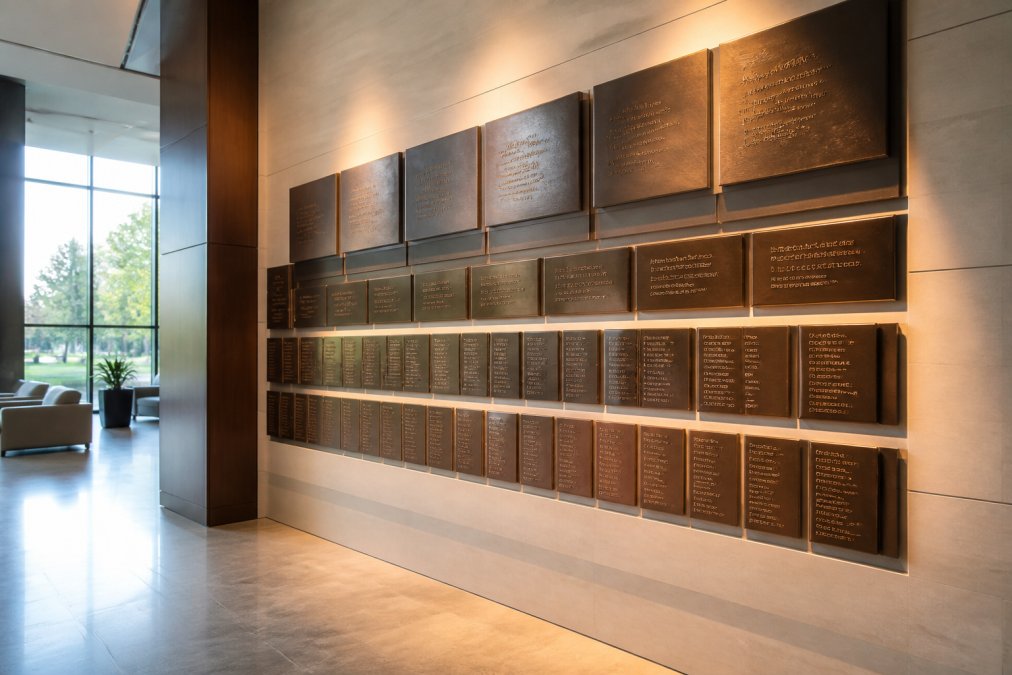
Permanent Plaques and Engraved Walls
Permanent plaques represent the traditional foundation of donor recognition. These bronze, brass, or stainless steel fixtures are built to last decades, often outliving the institutions they honor. The permanence signals respect and commitment, donors understand their names will remain visible for generations.
Engraved walls work best when you have a defined donor base and expect slower growth. Once plaques are affixed, adding new names requires physical modification, which can be costly and disruptive. However, this constraint becomes an advantage: the wall feels complete and intentional rather than perpetually under construction.
Material choice matters significantly. Bronze develops a natural patina over time, adding character and authenticity. Stainless steel maintains a polished appearance but requires more frequent cleaning. Brass occupies a middle ground, offering warmth without the maintenance demands of bronze. For custom donor recognition wall design, material selection should reflect your institution's aesthetic and climate conditions.
Modular and Scalable Systems
Modular systems address the growth problem inherent in permanent installations. These walls use individual plaques that slide into frames or mounting systems, allowing new donors to be added without disrupting existing names. The approach combines the permanence of engraved recognition with the flexibility of expansion.
Modular walls work particularly well for growing institutions, capital campaigns with phased giving levels, and organizations that expect significant donor acquisition over five to ten years. The visual consistency remains strong because all plaques follow the same design template and material specifications.
One consideration: modular systems require more active maintenance. Plaques can shift, frames may need realignment, and the overall appearance depends on proper installation and upkeep. Budget for annual maintenance rather than treating the wall as a one-time installation.
Digital and Interactive Displays
Digital donor walls represent a fundamentally different approach. Instead of physical plaques, donors appear on illuminated screens that can be updated instantly. Interactive touchscreens allow visitors to search donors by name, giving level, or campaign, then view photos, videos, or impact stories associated with each gift.
Digital displays excel at storytelling. A donor's name can link to their personal motivation, a video testimonial, or the specific program their gift funded. This creates emotional connection that a name alone cannot achieve. The systems also accommodate unlimited donors without physical space constraints, a critical advantage for large institutions or those with thousands of supporters.
However, digital walls require ongoing technical support, software subscriptions, and hardware replacement cycles. They also lack the permanence and tangibility that some donors value. A hybrid approach, combining a physical recognition wall with a digital complement, often delivers the best results.
Materials and Finishes for Donor Walls
The material you choose determines the wall's longevity, maintenance requirements, aesthetic impact, and cost trajectory. Each material tells a different story about your institution's values.
Bronze and Cast Metal remain the gold standard for institutional recognition. Bronze develops a rich patina over time, creating visual depth that improves with age. Cast bronze plaques are expensive upfront but require minimal maintenance and communicate permanence and prestige. Cast bronze works particularly well for educational institutions, hospitals, and established nonprofits where tradition carries weight.
Stainless Steel and Aluminum offer modern aesthetics with lower maintenance. Stainless steel resists corrosion and requires only occasional cleaning. Aluminum is lighter and more affordable but less durable in outdoor settings. These materials suit contemporary architecture and organizations seeking a sleek, minimalist appearance.
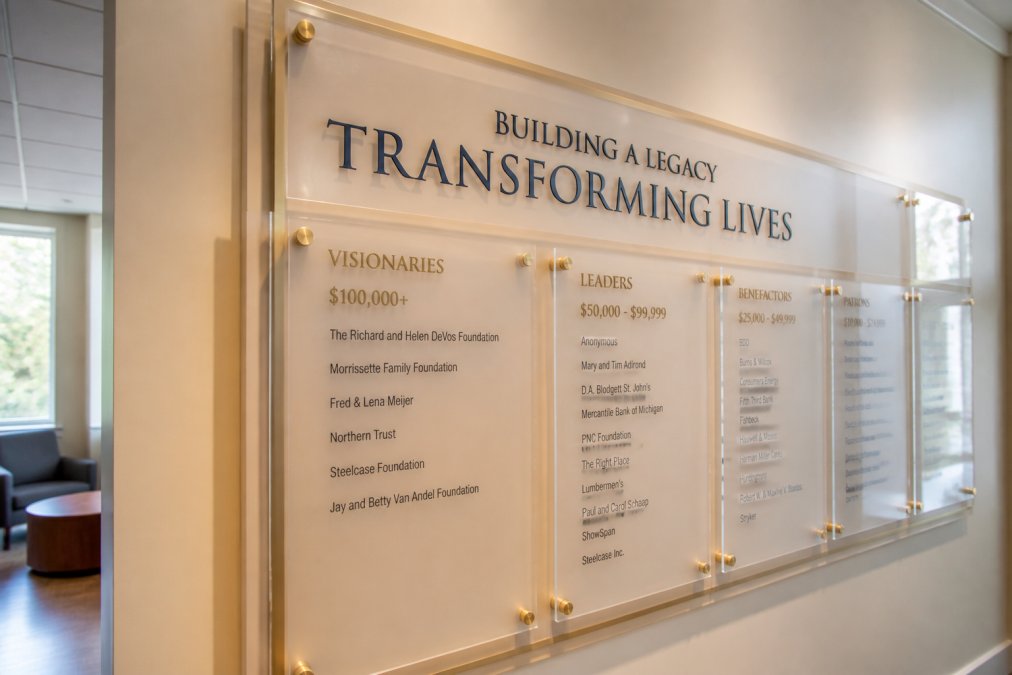
Acrylic and Plastic Composites provide flexibility and cost efficiency. Modern acrylic comes in multiple finishes, clear, frosted, colored, and specialty options. Acrylic allows for creative design possibilities: layered installations, three-dimensional lettering, and integrated lighting. Gino's Awards, Inc. frequently uses acrylic for custom donor recognition wall designs that require both visual impact and budget consciousness.
Wood Backing and Frames add warmth and institutional character. Wood pairs beautifully with metal plaques and works well in lobbies, libraries, and heritage buildings. The trade-off is maintenance: wood requires periodic refinishing and protection from moisture and pests.
Outdoor Materials demand special consideration. Weathering steel, marine-grade stainless, and sealed wood are essential for exterior installations. Avoid materials that will degrade under UV exposure or freeze-thaw cycles. The cost premium for weather-resistant materials is always justified, replacement is far more expensive than proper material selection upfront.
Donor Recognition Wall Wording Ideas That Inspire
The language on your wall matters as much as its physical presence. Wording should reflect your organization's mission while honoring individual generosity at appropriate levels.
Recognition Tiers and Giving Levels
Donor walls typically organize recognition by giving level, Founder, Benefactor, Patron, Sustainer, and Friend are common tiers. The wording for each level should feel distinct and aspirational without creating shame for lower-level donors.
Effective tier naming avoids purely numerical language. Instead of "Level 1" and "Level 2," use language that connects to your mission: "Builders" for those funding infrastructure, "Healers" for healthcare donors, "Educators" for scholarship supporters. This approach makes every tier feel meaningful rather than hierarchical.
Include the gift range discretely or omit it entirely. Some institutions print ranges; others prefer to let the tier name speak for itself. Research suggests that explicit ranges can discourage donors from moving to the next level, so consider whether the information serves your fundraising goals.
Mission-Aligned Messaging
Beyond donor names, consider adding brief mission statements or program descriptions near each section. A wall honoring scholarship donors might include: "Transforming Lives Through Education" or "Building Tomorrow's Leaders." This context reminds visitors why the wall exists and connects individual gifts to collective impact.
Institutional messaging should appear sparingly. Too much text overwhelms the visual design and distracts from donor recognition. A single mission statement at the top or bottom of the wall often suffices.
Personal donor messaging, allowing donors to include a short dedication or tribute, adds emotional depth but requires careful curation. Set clear guidelines: length limits, no promotional content, no controversial statements. Gino's Awards, Inc. helps organizations establish these parameters during the design phase to avoid complications during installation.
Donor Wall Design Best Practices for Maximum Impact
Effective donor wall design balances aesthetics, functionality, and institutional values. The best walls feel inevitable, as if they were always meant to be part of the space.
Visual Hierarchy and Storytelling
Hierarchy directs the eye and creates meaning. Founder names might appear larger than Sustainer names, but the difference should be subtle. Excessive size variation makes lower tiers feel diminished. A skilled designer creates distinction through placement, material, or color rather than dramatic size differences.
Storytelling happens through layout. Chronological arrangements show the wall's growth over time. Thematic groupings connect donors to programs they funded. Geographic layouts might organize donors by hometown or region. Each approach tells a different story about your institution's community.
Lighting amplifies impact dramatically. Uplighting on bronze plaques creates dramatic shadows and depth. Backlighting on acrylic makes names glow. Subtle ambient lighting ensures the wall remains visible and welcoming without appearing theatrical. The lighting design should enhance the wall without overwhelming it.
Accessibility and ADA Compliance
Accessibility in donor wall design means more than legal compliance, it reflects your institution's values. According to ADA compliance guidelines from the U.S. Department of Justice, physical displays must accommodate visitors with varying abilities.
Practical accessibility measures include: placing donor names at varying heights (not all at eye level), ensuring adequate lighting for those with vision impairments, providing digital alternatives for interactive walls, and maintaining clear pathways around the installation. For walls with extensive text, consider providing printed directories or digital companions that allow visitors to search and read content more easily.
Typography matters significantly. Sans-serif fonts in sizes 24pt and larger ensure readability from typical viewing distances. Adequate contrast between text and background is essential, dark text on light backgrounds or vice versa. Avoid reverse text (light on dark) for extended reading, as it causes eye strain.
Cost of Custom Donor Walls and Budget Planning
Donor wall costs vary dramatically based on materials, scale, and complexity. A modest engraved plaque wall for 50 donors might start at one price point, while an interactive digital display with multimedia integration occupies a completely different budget category.
Budget planning requires understanding what drives costs. Material selection is the primary factor, bronze costs significantly more than acrylic. Scale matters: a 4-foot by 6-foot wall costs less than a 10-foot by 15-foot installation. Complexity adds cost: custom shapes, integrated lighting, and multimedia functionality all increase the price.
Installation logistics affect the total investment. Walls requiring structural modifications, electrical work, or climate control systems cost more than surface-mounted installations. Professional installation is typically essential, attempting DIY installation on a major donor wall risks damaging the materials and compromising the design.
Long-term maintenance should factor into your decision. Bronze walls require minimal upkeep but benefit from periodic professional cleaning. Digital walls demand ongoing software support and hardware replacement. Modular systems need occasional realignment and plaque maintenance.
For organizations uncertain about budget, Gino's Awards, Inc. offers consultation to explore options across different price ranges. Discussing your vision, timeline, and constraints helps identify solutions that deliver impact without overextending your resources.
| Factor | Budget Impact | Consideration |
|---|---|---|
| Material Selection | High | Bronze premium vs. acrylic economy |
| Wall Dimensions | High | Larger walls cost proportionally more |
| Installation Complexity | Medium | Electrical, structural work adds cost |
| Ongoing Maintenance | Medium-High | Digital walls require tech support |
| Customization | Medium | Custom shapes and finishes increase price |
| Timeline | Low-Medium | Rush orders may incur expedited fees |
Installation and Maintenance Considerations
Installation timing affects both cost and quality. The ideal scenario involves planning the wall before construction or renovation, allowing the designer to integrate it into the space rather than retrofitting it afterward. This approach saves money and produces superior aesthetic results.
Professional installation matters. Walls must be level, securely anchored, and properly illuminated. Poor installation can cause plaques to shift, lighting to fail, or the entire installation to appear amateurish. Budget for experienced installers rather than treating installation as a cost-cutting opportunity.
Maintenance requirements depend on material and location. Bronze walls in protected indoor environments need minimal care, occasional dusting and annual professional cleaning suffice. Outdoor installations require more attention: checking for corrosion, resealing wood components, and addressing any weather damage. Digital walls need regular software updates, screen cleaning, and hardware monitoring.
Documentation is essential. Keep records of donor names, gift amounts, dates, and any special designations. This information becomes critical if you need to update or expand the wall. Digital records should be backed up separately from the physical installation.
Planning for future growth prevents costly modifications later. Modular systems accommodate expansion naturally. Fixed installations should be designed with intentional empty space or expansion areas that allow future additions without disrupting the original design.
A donor recognition wall isn't simply a plaque or display, it's a statement about your organization's values and gratitude. The most effective walls balance beauty with function, permanence with flexibility, and individual recognition with collective mission. When you're ready to move forward with a custom donor recognition wall design, Gino's Awards, Inc. can guide you through every step, from initial concept through installation and beyond. Our nearly 75 years of experience crafting custom recognition solutions means we understand how to translate your vision into a wall that inspires donors, impresses visitors, and honors your institution's legacy. Call Gino's Awards at (216) 831-6565 to discuss your project or visit our website to explore design possibilities and request a consultation.
Frequently Asked Questions
What are the best materials for a custom donor recognition wall?
The best materials depend on your space and durability needs. Bronze and cast metal offer timeless elegance and permanent durability, ideal for outdoor or high-traffic areas. Wood-mounted metal plaques provide warmth and traditional appeal. Acrylic and specialty finishes offer modern flexibility and easy updates. For organizations needing frequent changes, modular systems using acrylic or plastic allow donors to be added without replacing the entire display. Consider maintenance requirements, lighting, and how the material aligns with your organization's brand identity when selecting materials for your donor recognition wall design.
What should be included in donor recognition wall wording ideas?
Effective donor recognition wall wording includes the donor's name, gift amount or giving level, date of contribution, and a brief mission-aligned message. Many organizations include phrases like 'In Honor Of,' 'In Memory Of,' or recognition of the impact the gift creates. Keep wording concise and professional. Consider tiered recognition language that reflects giving levels without diminishing smaller donors. Include your organization's mission statement or a powerful impact statement at the top. Avoid generic phrases; instead, connect the donor's generosity directly to your organization's outcomes. Professional engraving ensures the wording remains legible and dignified for decades.
How much does a custom donor recognition wall typically cost?
Custom donor wall costs vary significantly based on materials, size, complexity, and installation. Permanent bronze or metal plaques range from moderate to premium pricing depending on fabrication. Digital interactive displays typically cost more upfront but offer unlimited donor capacity and easy updates. Modular acrylic systems provide flexibility at mid-range pricing. For accurate pricing tailored to your specific needs, budget, and timeline, contact a custom recognition provider to request a quote. Many providers offer free design consultations to help you understand the investment required for your project.
How can I design a donor wall that's easy to update as new donors contribute?
Choose modular or scalable systems that allow new donor plaques or entries to be added without replacing the entire display. Digital donor walls offer the easiest updates, allowing new names and stories to be added instantly through cloud-based software. Perpetual plaque systems feature blank spaces for future donors, growing with your organization. Acrylic and plastic modular systems can accommodate expansion without redesign. When planning your donor recognition wall design, discuss expansion capacity with your fabricator upfront. Ensure the layout has intentional space for growth and that the installation method allows for straightforward additions as your fundraising succeeds.
This article was written using GrandRanker