


5 Peer-to-Peer Recognition Program Examples for Small Business
Table of Contents
- Why Peer-to-Peer Recognition Matters for Small Business
- 1. Bonusly: Points-Based Recognition with Social Feed
- 2. Kudoboard: Collaborative Recognition Boards for Team Milestones
- 3. Assembly: Automated Recognition with Slack Integration
- 4. Guusto: Flexible Gifting for Deskless Teams
- 5. Bucketlist Rewards: Gamified Recognition and Custom Awards
- Peer Recognition Program Templates You Can Implement Immediately
- Employee Recognition Best Practices for Small Teams
- Frequently Asked Questions
Last Updated: September 1, 2026
Why Peer-to-Peer Recognition Matters for Small Business
A peer to peer recognition program transforms how small teams celebrate wins by letting employees recognize each other directly instead of recognition flowing only from managers down. This shift builds genuine connection, strengthens team bonds, and creates a culture where appreciation flows naturally across the organization.
Small business owners face a specific challenge: limited budget for employee engagement, yet retention and morale directly affect your bottom line. Peer recognition fills that gap by making appreciation continuous, authentic, and inclusive. When employees see their colleagues celebrated regularly, they stay longer, collaborate better, and feel genuinely valued.

According to Gallup's research on workplace engagement, teams with strong recognition cultures show significantly higher retention rates and productivity. For small businesses, that translates directly to lower hiring costs and stronger institutional knowledge.
What makes peer recognition different is the emphasis on peer-to-peer connection. Employees nominate, recognize, and celebrate each other. Managers participate, but they're not the only voice. This democratization of recognition creates psychological safety and empowers team members to acknowledge good work without waiting for leadership approval.
Below are five proven peer recognition program examples that work for small teams, plus templates you can implement immediately without expensive software.
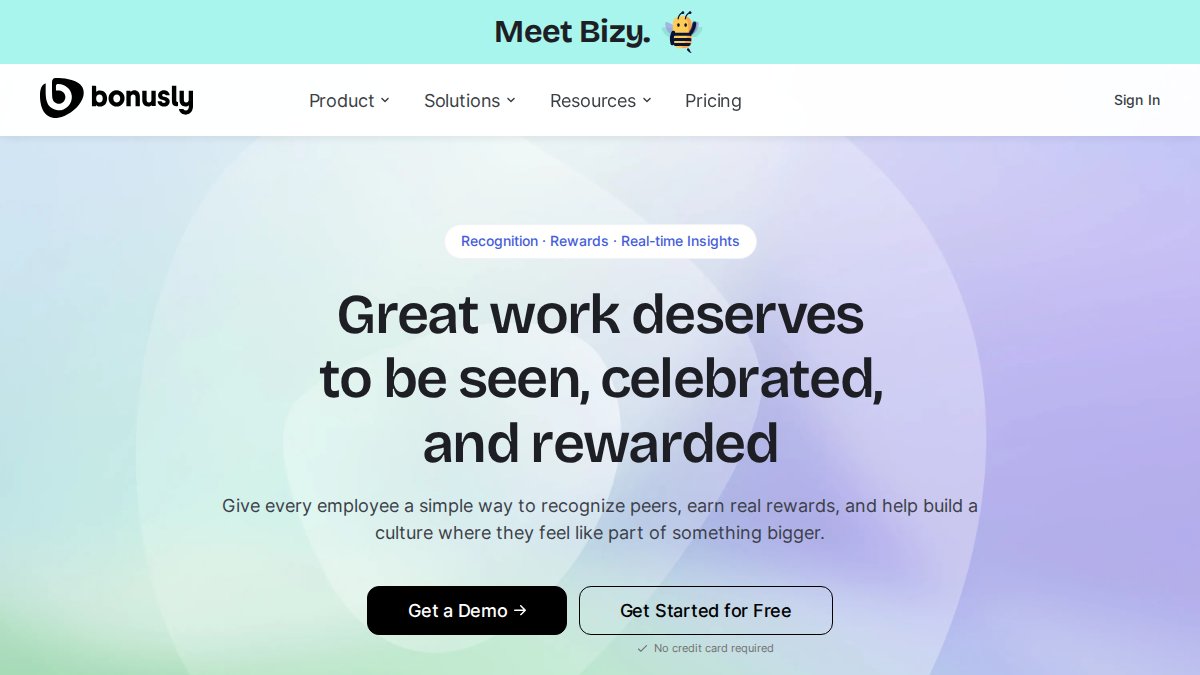
1. Bonusly: Points-Based Recognition with Social Feed
Bonusly delivers peer recognition where your team already works. Employees give each other points for good work, and those points appear on a visible social feed that celebrates contributors publicly. The platform integrates directly with Slack and Microsoft Teams.
For small businesses, Bonusly offers affordability and simplicity. The free tier supports unlimited team members and basic recognition. Paid plans start at $3 per seat per month, making it accessible for teams under 50 people. The points system is transparent, and employees can redeem for gift cards, cash, or company swag from over 1,200 global reward options.
The social feed element reinforces company values and creates a visible culture of appreciation. New hires see what good work looks like, and quiet contributors get acknowledged.
2. Kudoboard: Collaborative Recognition Boards for Team Milestones
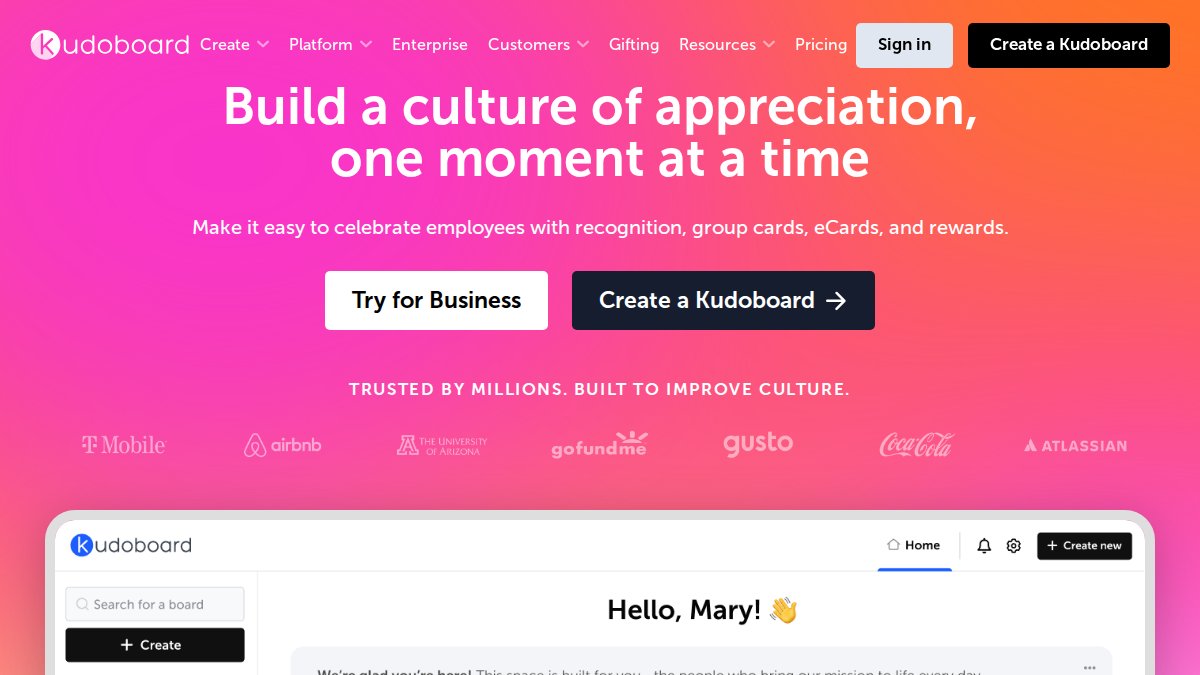
Kudoboard creates dedicated recognition boards for specific milestones, work anniversaries, project completions, or team celebrations. Employees post messages, photos, and videos to a shared board that the honoree receives and keeps.
For small businesses, this works well when you want recognition to feel special and intentional rather than constant. A work anniversary board becomes a keepsake. The visual, multimedia nature makes recognition feel more personal than text-only platforms.
The free tier covers up to 10 contributors per board. Paid plans start at $5.99 per board for larger groups. If you celebrate milestones quarterly or monthly, the per-board pricing keeps costs predictable and low.
Kudoboard integrates with Slack and Teams on higher-tier plans. The limitation is that it's event-based rather than continuous, making it ideal for meaningful, visual celebrations tied to specific moments.
3. Assembly: Automated Recognition with Slack Integration
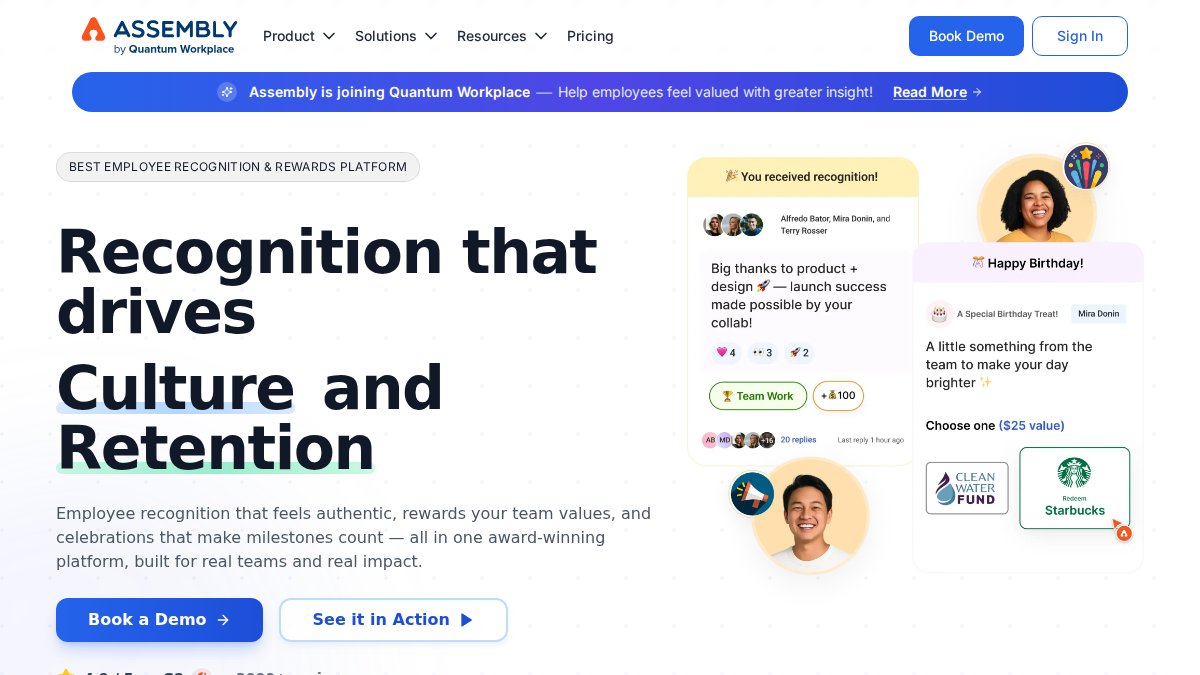
Assembly combines peer recognition with automated milestone celebrations. Employees recognize each other through a social feed, while the platform automatically celebrates birthdays and work anniversaries. It functions as a lightweight intranet, surfacing company news and recognition in one place.
The free tier offers unlimited team members, unlimited recognition, and core features at no cost. Paid plans start at $3 per user per month, billed annually. For small businesses testing peer recognition before committing significant budget, the free tier lets you validate the concept with your team.
Assembly's Slack integration means recognition notifications land where your team already communicates. Automated celebrations remove the friction of remembering milestones. Customizable badges and culture rewards let you create recognition tied to your specific values.
The free plan has limited message history, so you'll need a paid tier if you need to preserve recognition records long-term.
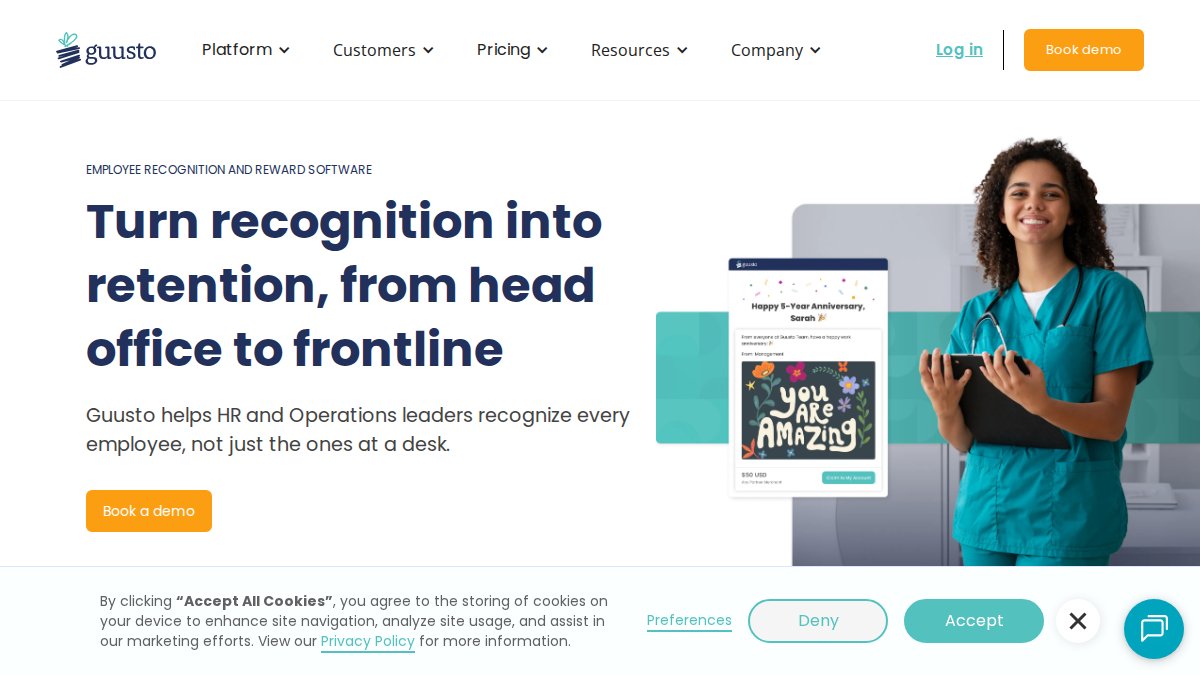
4. Guusto: Flexible Gifting for Deskless Teams
Guusto solves a specific problem: how do you recognize employees who don't have work email or a computer? For small businesses in retail, hospitality, or field services, Guusto delivers gifts via email, SMS, printed card, or QR code, reaching employees however they prefer.
The platform handles peer recognition and manager-to-peer gifting. Employees can send each other gift cards with no markup, and unclaimed gifts are credited back in full. Guusto donates to One Drop Foundation for every gift sent, adding a values-aligned element to recognition.
Starting at $150 per month for the Lite plan, Guusto costs more upfront. But for businesses with significant deskless workforces, it's designed for that reality. The SMS and printed card options ensure every employee gets recognized, regardless of their access to digital tools.
5. Bucketlist Rewards: Gamified Recognition and Custom Awards
Bucketlist Rewards brings gamification to peer recognition. Employees earn points for being recognized, which they redeem from a global rewards marketplace. The platform includes leaderboards, badges, and custom awards that make recognition feel like an achievement system.
The gamification element drives engagement. Employees see their peers climbing leaderboards, and badges create visual status. Custom awards let you celebrate specific behaviors unique to your business. For small teams that respond well to friendly competition, this approach significantly increases recognition frequency.
Bucketlist Rewards requires a minimum annual investment of $2,300, roughly $192 per month. For teams under 15 people, that's a meaningful commitment. But the platform delivers transparent pricing with no hidden markups on rewards, and customization options let you build a program that feels uniquely yours.
The mobile app includes offline support and QR code onboarding, making it accessible to teams that don't spend their day at a desk.
Peer Recognition Program Templates You Can Implement Immediately
Not every small business needs software. These templates work with email, Slack, or a shared document.
Monthly Recognition Rotation Template
Run a monthly recognition cycle where one team member is spotlighted each week. Colleagues submit brief recognition messages, and you compile them into a simple email or Slack post.
Template Structure:
[Employee Name] Spotlight, [Month/Week]
Recognized for: [Specific achievement or behavior]
Peer recognition:
- "[Colleague name]: [Specific example of their contribution]"
- "[Colleague name]: [Specific example of their contribution]"
- "[Colleague name]: [Specific example of their contribution]"
What's next: [Optional: upcoming project or goal the employee is working toward]
Send a Slack message or email asking colleagues to submit one sentence about why this employee deserves recognition. Compile responses and post the spotlight publicly. Rotate through your team so everyone gets recognized quarterly.
This approach requires no software, feels authentic because peer input is included, and employees remember being recognized because their colleagues contributed.
Values-Aligned Recognition Card Template
Create a simple one-page template that ties recognition to your company values.
Recognition Card
Employee: [Name]
Value Demonstrated: [Your company value: e.g., "Customer First," "Integrity," "Collaboration"]
Specific Example: [What did they do? Be concrete: "Stayed late to help a customer troubleshoot an issue" or "Caught an error in the budget before it went to leadership"]
Impact: [Why it mattered: "This prevented a $5K mistake" or "The customer became a repeat client"]
Recognized by: [Peer or manager name]
Keep a stack of printed cards on a central desk. Employees fill them out when they see a colleague demonstrate a company value. Post completed cards on a recognition wall or in a shared digital folder.
The values alignment reinforces culture. The "specific example" and "impact" fields force meaningful recognition rather than generic praise.
Employee Recognition Best Practices for Small Teams
Implementing a peer recognition program is only half the work. The other half is building habits that make recognition stick.
Build a Feedback Loop That Works
Recognition works best when it's connected to feedback. Employees should know not just that their work was appreciated, but how it mattered and what to do more of. Train your team on recognition that includes context. Instead of "Great job on the presentation," try "Your breakdown of the Q4 numbers was clear and helped the client understand our growth trajectory. Can you lead the next investor update?" That specificity creates a feedback loop.
For small teams, this often happens naturally in Slack or in-person, but be intentional. When you see good recognition happening, amplify it. Over time, your team's recognition vocabulary becomes more specific and valuable.

Measure What Matters: ROI and KPIs for Small Budgets
Small business owners need to know if recognition programs move the needle. Track three metrics that matter:
Employee Retention Rate: Track how long employees stay before and after implementing peer recognition. Even a 10% improvement in retention saves significant hiring and training costs.
Recognition Frequency: Count how many peer-to-peer recognitions happen monthly. A healthy program shows increasing frequency over the first 3-6 months as the habit takes root (peer-reviewed research).
Employee Engagement: Ask your team quarterly: "Do you feel appreciated at work?" on a 1-5 scale. A program moving the needle should shift that average up by 0.5-1 point within six months.
For small businesses, the ROI of peer recognition often shows up first in reduced turnover. Hiring and training a replacement employee costs 50-200% of annual salary (shrm.org). If a recognition program helps retain even one key employee per year, it pays for itself many times over.
Building a peer recognition culture doesn't require enterprise software or massive budget. The five programs above offer different approaches based on your team size, budget, and how your employees work.
At Gino's Awards, Inc., we've worked with small businesses for over 75 years creating tangible recognition that complements digital programs. While peer recognition software builds daily culture, physical awards, custom plaques, service anniversary recognition, or milestone trophies create lasting keepsakes that employees display and remember. Many small businesses combine both: use a peer recognition platform for continuous daily appreciation, then layer in physical awards for major milestones. Call (216) 831-6565 or visit our site to explore how custom awards can anchor your recognition program with quality that lasts.
Frequently Asked Questions
What are the main benefits of a peer-to-peer recognition program for small businesses?
Peer-to-peer recognition programs boost employee engagement, strengthen workplace culture, and improve retention without requiring large budgets. When employees recognize each other, it creates a positive reinforcement loop that builds team morale and makes people feel valued. Small businesses see measurable gains in employee satisfaction and reduced turnover. The program also shifts recognition responsibility from managers alone to the entire team, distributing the appreciation and strengthening relationships across your organization.
How do I implement a peer recognition program on a budget?
Start with free or low-cost tools like Assembly (which offers a free plan) or Kudoboard (starting at $5.99 per board). Alternatively, use a hybrid approach: combine a simple shared spreadsheet or email template with handwritten recognition cards and monthly team shout-outs. Define clear company values first, train your team on the program, and launch with a pilot group. Many small businesses see success without software by using a physical recognition wall or a simple rotation where employees nominate peers each week. The key is consistency and visibility, not expense.
What should I include in peer recognition program templates?
Effective peer recognition program templates should include: the employee's name, the specific behavior or achievement being recognized, which company value it aligns with, and space for the recognizer's name. Templates work best when they're simple and quick to complete, aim for 30 seconds or less. Include examples of strong recognition (specific, not vague) and make templates available in multiple formats: printable cards, email, Slack messages, or digital forms. A values-aligned template helps employees connect individual actions to company culture, making recognition more meaningful and reinforcing what truly matters to your organization.
How do I measure ROI for a small business recognition program?
Track these KPIs: participation rate (percentage of employees giving and receiving recognition monthly), employee retention rate (compare before and after program launch), and engagement survey scores (ask employees if they feel valued). For service anniversaries and milestones, measure how many employees reach tenure goals and whether turnover decreases in your first year. Small businesses can also track informal metrics: reduced absenteeism, fewer internal complaints, and improved customer feedback. Most small teams see measurable culture shifts within 3-6 months. Costs are typically low, so ROI is strong even with modest improvements in retention.
What are some unique, non-monetary recognition ideas for small business staff?
Beyond cash or gift cards, try: public recognition in team meetings or company newsletters, preferred parking spots or flexible hours for a week, choice of next team lunch location, professional development time or course sponsorship, handwritten thank-you cards from leadership, and feature recognition on an internal social feed or announcement board. Digital badges and milestone celebrations (work anniversaries, project completions) cost nothing but feel meaningful. For service anniversaries specifically, consider engraved plaques or personalized awards that commemorate tenure. Non-monetary recognition often resonates more deeply than generic rewards because it shows intentional, personalized appreciation.
This article was written using GrandRanker