


Importance of Personalized Awards for Team Morale
Every American manager knows that applause at an annual meeting feels good, but genuine motivation happens when recognition is truly personal. In workplaces across the United States, generic trophies or mass emails rarely drive lasting engagement. A personalized award creates a moment of real appreciation, linking achievements to the unique goals and values of your team. This approach transforms employee recognition from a routine gesture into a powerful driver for satisfaction, loyalty, and higher performance.
Table of Contents
- Defining Personalized Awards And Their Purpose
- Types Of Personalized Awards For Recognition
- How Customization Boosts Employee Motivation
- Implementing Personalized Awards In The Workplace
- Pitfalls To Avoid When Ordering Personalized Awards
Key Takeaways
| Point | Details |
|---|---|
| Personalized Awards Boost Motivation | Custom awards acknowledge individual contributions, fostering lasting employee engagement and loyalty. |
| Clear Criteria Enhances Fairness | Establishing transparent eligibility standards for awards prevents resentment and boosts morale. |
| Diverse Award Types Meet Unique Needs | Matching award types to achievements ensures recognition resonates with recipients, enhancing its impact. |
| Timely Recognition Maximizes Impact | Presenting awards promptly following achievements reinforces the connection between accomplishment and acknowledgment. |
Defining Personalized Awards and Their Purpose
When you walk into most corporate offices, you’ll see plaques and trophies on walls. But here’s the thing: not all awards carry the same weight. A personalized award is fundamentally different from a generic recognition. A personalized award is a formal recognition given to an individual or team that acknowledges specific achievements, efforts, or contributions tailored to that person’s unique accomplishments. Unlike off-the-shelf trophies with standard engraving, personalized awards reflect the recipient’s actual performance, values, and role within your organization. They’re customized tokens of appreciation that show you actually paid attention to what someone did, not just that they exist on your payroll.
The core purpose of personalized awards goes beyond decoration. These recognitions serve to motivate employees by directly linking their specific accomplishments to tangible, meaningful acknowledgment. When an HR manager or event planner selects a recipient based on clearly defined criteria and presents an award crafted specifically for them, it sends a powerful signal: we notice, we value, and we appreciate what you’ve done. Tailored recognitions designed to honor individual achievements enhance engagement and personal development by providing meaningful acknowledgment that resonates with each recipient’s unique successes. This approach fosters a culture where sustained effort and improved performance become the norm, not exceptions. Your team members don’t just get recognized; they get recognized for the exact reasons that matter to your organization’s goals.
The practical value for HR teams and event planners is substantial. You can exercise discretion in selecting recipients based on criteria that reflect your organization’s unique goals and values. Maybe one employee solved a critical production problem, another mentored five new hires, and a third improved customer satisfaction scores by 23 percent. Each deserves recognition, but each deserves different recognition. A customized plaque or award that specifies their contribution creates a lasting memory of that moment and reinforces the behaviors you want to see repeated. When employees see colleagues receiving personalized recognition for tangible achievements, they understand exactly what excellence looks like in your workplace. They know the standards. They can see themselves earning similar recognition. This clarity alone drives higher engagement than generic appreciation ever could.
Consider how this differs from standard recognition approaches. A company-wide email thanking everyone for their hard work creates noise. A personalized award for the employee who reduced onboarding time by 40 percent, with a custom engraved plaque sitting on their desk, creates impact. The award becomes a conversation starter, a reminder on difficult days, and proof that their work mattered. For event planners orchestrating recognition ceremonies or award presentations, this distinction transforms the entire experience from a procedural obligation into a meaningful moment that people talk about for months afterward.
Here’s a comparison of generic recognition versus personalized awards to highlight their workplace impact:
| Aspect | Generic Recognition | Personalized Awards |
|---|---|---|
| Emotional Impact | Often minimal or short-lived | Deep, long-lasting motivation |
| Visibility | Low, easily overlooked | High, memorable and visible |
| Alignment with Values | Rarely linked to company goals | Tied to specific organizational values |
| Influence on Retention | Little effect on turnover | Increases loyalty and retention |
| Team Engagement | Creates general awareness | Inspires targeted, repeatable behaviors |
Pro tip: When selecting which achievements to recognize with personalized awards, focus on behaviors and outcomes that directly align with your team’s strategic priorities and values, then make those criteria transparent so other employees understand the path to similar recognition.
Types of Personalized Awards for Recognition
Not every achievement deserves the same type of award. Your recognition strategy becomes exponential more effective when you match the award format to the accomplishment and the recipient. Personalized awards come in various forms including certificates, pins, and trophies, each customized to reflect particular accomplishments and organizational values. Some recognitions work better for celebrating team milestones, while others shine when honoring individual excellence. For HR managers and event planners building a comprehensive recognition program, understanding these distinctions means the difference between an award that gets filed away and one that becomes a cherished keepsake.
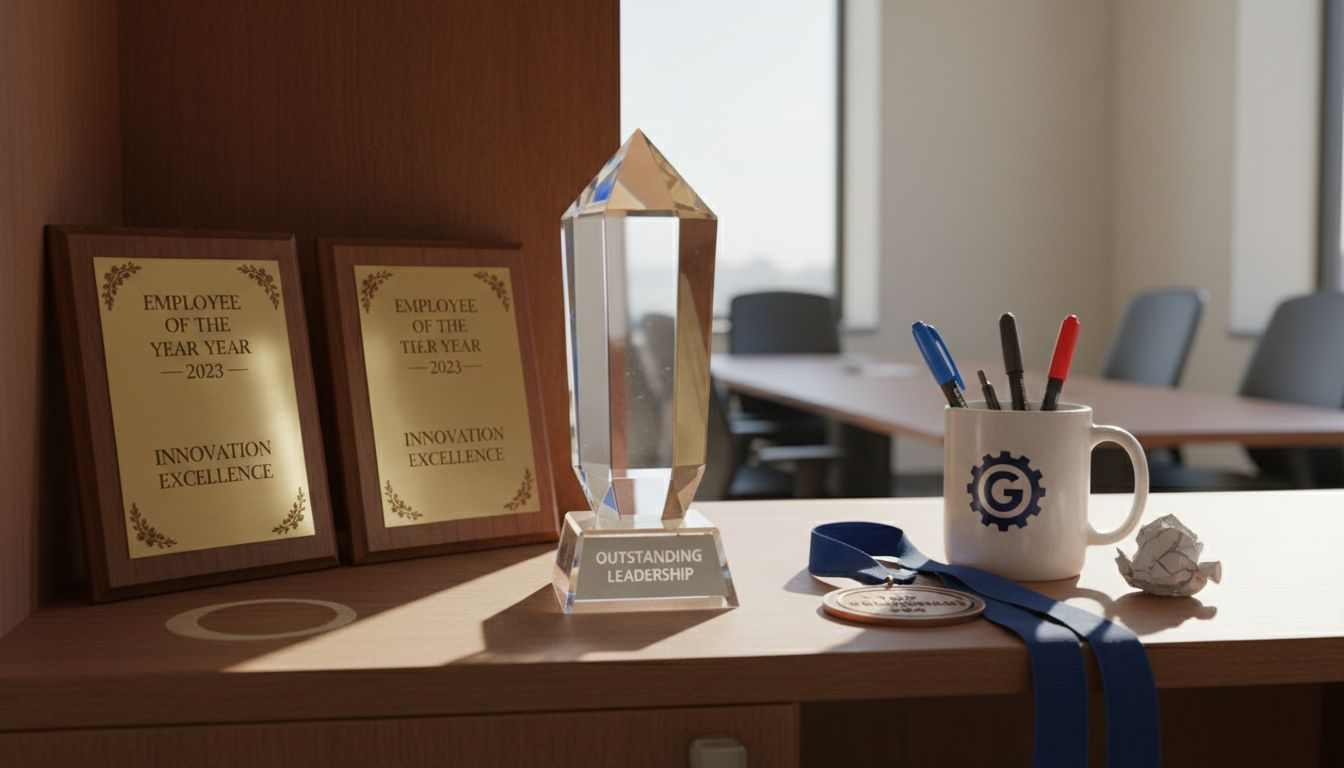
The most common award types serve distinct purposes within your team structure. Plaques and engravings remain the gold standard for professional recognition. They sit on desks, hang on walls, and become visible reminders of achievement every single day. A personalized plaque for employee recognition demonstrates that you invested time and resources into acknowledging someone’s contribution. These work exceptionally well for major milestones like promotions, project completions, or years of service. Trophies carry ceremonial weight and work best when presented publicly at events or annual recognition ceremonies. They communicate prestige and significance. Certificates offer flexibility and cost effectiveness, making them ideal for recognizing multiple achievements throughout the year without straining budgets. Pins and cords serve as wearable recognitions that build team pride and identity, especially useful for certification completions or safety milestones. Custom gift items like engraved desk accessories, leather portfolios, or branded merchandise add a personal touch that extends the recognition beyond the ceremony itself.
Beyond physical awards, the U.S. federal government structure outlines four primary categories worth adapting to your workplace context. Lump-sum cash awards provide tangible financial incentives tied to specific performance outcomes, making them particularly effective for quantifiable achievements like exceeding sales targets or completing projects ahead of schedule. Honorary awards celebrate exceptional performance and contributions that transcend normal job duties, often requiring nominations from peers or supervisors. Informal recognition awards happen in real-time through verbal acknowledgment, thank-you notes, or social recognition within your team communication channels. These cost nothing but create measurable impact when done authentically. Time-off rewards resonate particularly strongly with modern employees seeking work-life balance. Offering an extra day off, flexible Friday afternoons, or extended lunch periods recognizes achievement while directly improving employee well-being.
The key insight for your program is layering different award types throughout the year. Start with frequent informal recognition and casual acknowledgments. Build toward quarterly or monthly ceremonies featuring engraved plaques or certificates for specific contributions. Reserve your most prestigious physical trophies or cash awards for annual milestones and exceptional achievements. This tiered approach prevents recognition fatigue, maintains genuine meaning, and creates a clear pathway for employees to see how consistent effort leads to increasingly significant acknowledgment. Different categories target specific behaviors and achievements, ensuring relevance and encouraging a wide range of contributions. When an entry-level team member sees themselves moving from informal shout-outs to certificate recognition to plaque-worthy achievements, they understand the progression and stay motivated throughout the year.
Here’s a summary of award types and when they are most effective:
| Award Type | Best Use Case | Key Benefit |
|---|---|---|
| Plaque | Major milestone achievements | Lasting daily reminder |
| Trophy | Annual public ceremonies | Signals high prestige |
| Certificate | Frequent, smaller milestones | Cost-effective, flexible |
| Pin/Gift Item | Team pride or certifications | Boosts identity, morale |
| Cash Bonus | Performance-based targets | Immediate tangible reward |
| Time-off Reward | Work-life balance campaigns | Enhances well-being |
Pro tip: Match your award type to the magnitude and nature of the achievement: use informal recognition for daily contributions, certificates or pins for quarterly milestones, plaques for significant projects or anniversaries, and trophies or special gifts for annual or career-defining accomplishments.
How Customization Boosts Employee Motivation
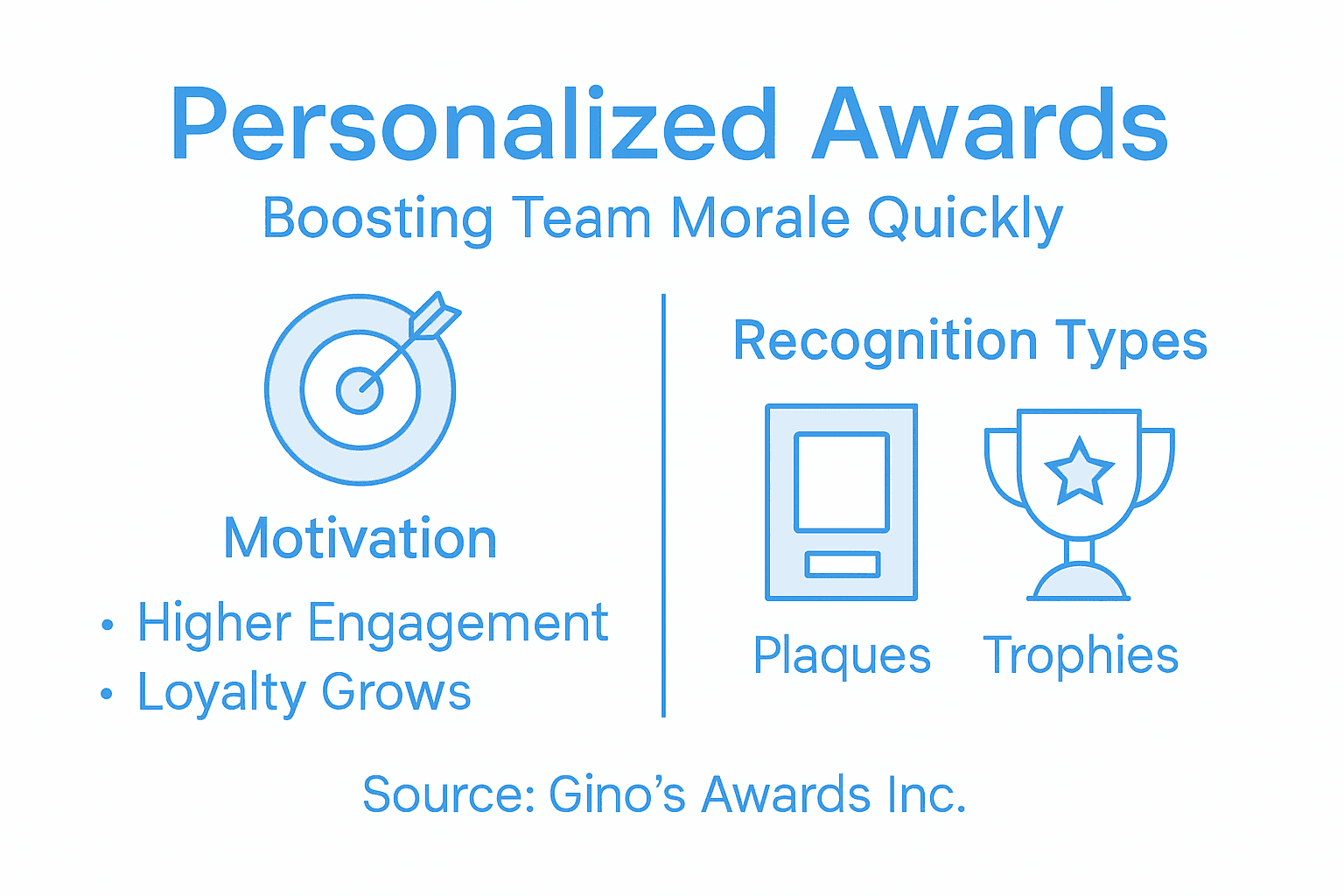
Here’s what most HR managers discover after their first generic recognition event: people smile politely, then move on. But hand someone an award that specifically acknowledges their unique contribution? That person talks about it for years. The difference between these two outcomes lies entirely in customization. Customization in employee recognition transforms a standard acknowledgment into a meaningful moment that resonates deeply with each recipient. When you tailor the award itself, the presentation, and the recognition message to reflect an employee’s individual strengths, goals, and preferences, you’re sending a message that goes far beyond thank you. You’re saying “I see you. I understand what you contributed. This matters because of who you are and what you bring to this team.”
The psychological impact of customized recognition operates on multiple levels. Customized rewards systems positively influence motivation by recognizing unique contributions and differentiating performance in ways that feel genuinely fair. When an employee receives an award that specifically names their accomplishment, includes details about their individual effort, or incorporates elements reflecting their personal interests, the brain registers this as authentic appreciation rather than routine ceremony. This distinction matters enormously. A generic plaque that could apply to anyone triggers minimal emotional response. A custom engraved award that highlights how someone’s problem-solving approach saved a client relationship, or how their mentorship transformed a struggling team member’s career trajectory, creates a lasting emotional imprint. That award ends up on a desk, shelf, or wall where the employee sees it regularly. Each time they see it, they remember not just the recognition moment, but the specific value they contributed. This repeated reinforcement drives sustained motivation far more effectively than a onetime verbal acknowledgment ever could.
Practical customization operates across multiple dimensions. Beyond the physical award itself, you can customize the criteria for earning recognition, the timing of when recognition happens, and the method of presentation. Maybe one employee thrives on public recognition in team meetings, while another prefers private acknowledgment. One person values monetary rewards, another values additional professional development opportunities. One team prioritizes innovation achievements, while another celebrates consistency and reliability. When you build flexibility into your recognition program, you acknowledge that people are fundamentally different in what motivates them. Personalized approaches ensure relevance and foster engagement by addressing specific employee needs, leading to improved morale and retention. This is why creating a one-size-fits-all awards program typically underperforms. The most effective HR managers and event planners treat recognition customization as a strategic tool, not an afterthought. They gather information about what matters to each team member. They ask questions during one-on-one meetings. They observe what kinds of achievements their people celebrate among themselves. Then they design recognition that lands differently for each person because it was designed with that person in mind.
Consider the practical implementation angle. Start by identifying what your high-performing employees care about. Does one person collect industry certifications? Create an award recognizing their professional growth. Does another take pride in team dynamics? Highlight their collaborative spirit in the award text. Does a third employee care deeply about customer impact? Make that the centerpiece of their recognition. The customization doesn’t need to be expensive. An engraved plaque with personalized text costs almost nothing more than a generic one. But the psychological difference is profound. Similarly, tailoring incentives to individual accomplishments cultivates a sense of fairness and appreciation that drives higher productivity. When employees see their peers receiving recognition tailored to their specific strengths and achievements, they understand that the bar for recognition isn’t a fixed standard everyone must meet identically. Rather, the bar is “contribute meaningfully in ways that align with your strengths,” which feels infinitely more achievable and fair.
The retention impact becomes visible within 6 to 12 months. Employees who receive customized recognition stay longer, produce higher quality work, and actively recruit others to your organization because they describe working there as feeling genuinely valued. This isn’t accidental. It flows directly from the consistent message that their individual contributions matter enough to warrant thoughtful, customized acknowledgment.
Pro tip: Create a simple employee profile spreadsheet noting each person’s motivations, achievement preferences, and communication style, then reference it quarterly when planning recognition to ensure customization matches individual needs.
Implementing Personalized Awards in the Workplace
Moving from theory to action requires a structured approach. You can’t simply decide to implement personalized awards and expect success overnight. The process demands intentional planning, clear communication, and consistent execution. Implementing personalized awards effectively starts with establishing what you’re actually trying to recognize and reward. What behaviors align with your organizational mission? Which contributions deserve public acknowledgment versus quiet recognition? What would motivate your specific team members? These aren’t one-time questions. They’re ongoing conversations that shape your entire recognition strategy. The foundation begins with establishing clear criteria aligned with organizational goals, ensuring that every award reinforces what your organization actually values. Without clarity, you end up recognizing inconsistently, which breeds resentment rather than motivation. Someone receives an award for effort while another person receives one for results. Another gets recognition for individual achievement while a peer gets recognized for teamwork. Employees quickly notice these inconsistencies and start questioning whether the system is fair.
The practical mechanics of implementation break into manageable steps. First, map your recognition infrastructure. Decide which award types you’ll use for which achievements. Will certificates recognize quarterly performance? Plaques for annual milestones? Trophies for exceptional achievements? Cash bonuses for specific targets? Once you’ve decided your award types, create a simple one-page guideline document that managers can reference. This document should answer basic questions: What qualifies for recognition? How do people get nominated? Who makes the final decision? How quickly will the award be presented after selection? You don’t need something elaborate. A straightforward reference guide prevents inconsistency and gives leaders confidence in their selections. Second, involve leadership directly in the process. The best recognition programs position managers as active participants in selecting recipients rather than passive observers. Managers see daily performance that executives miss. They understand which team members solved problems creatively, mentored struggling colleagues, or went above and beyond. When you give managers discretion to nominate and select recipients based on specific criteria, you tap into their frontline knowledge and increase buy-in across the organization.
Designing the actual awards requires thoughtful consideration of your audience. Successful implementation requires designing incentive programs that offer a range of recognition types, suitable for various employee achievements. This means you can’t treat every award identically. Someone might appreciate a beautifully engraved desk plaque highlighting their innovation, while another would value a personalized leather portfolio and extra professional development funds. Still another would treasure a certificate paired with flexible work-from-home privileges. The physical award matters less than the message it sends and how it resonates with the recipient. This is where Gino’s Awards services become invaluable. Rather than ordering generic plaques in bulk, you can work directly with customization services to create awards that reflect each person’s specific contribution. Maybe one award highlights customer impact. Another emphasizes leadership development. A third celebrates operational excellence. Each tells a different story because each person’s contribution tells a different story.
Timing and communication amplify the impact significantly. Recognition that arrives weeks after the achievement loses psychological impact. Aim to present or announce awards within two to four weeks of the decision. Longer delays suggest bureaucracy rather than genuine celebration. Communication transparency matters equally. When people understand why someone received recognition, it clarifies expectations for everyone else. A company email explaining that Sarah received an award for identifying a process improvement that saved 200 annual hours tells other employees exactly what kind of contribution gets recognized. It’s not mysterious. It’s not political. It’s clear. Finally, make recognition visible and recurring. A recognition ceremony at a team meeting, a feature in your company newsletter, or a quick social media post about the awardee amplifies the motivational impact. It shows other employees that achievement actually gets celebrated in your workplace. It’s not hidden in an office somewhere. It’s celebrated publicly. This visibility changes team culture. People start noticing what gets recognized. They start believing that their contributions matter. They start raising their performance standards because they see the bar and understand they can reach it.
Pro tip: Establish a recognition calendar noting when different award types are presented throughout the year, such as quarterly certificates, mid-year plaques, and annual trophies, so leadership anticipates recognition opportunities and employees understand the timeline.
Pitfalls to Avoid When Ordering Personalized Awards
Good intentions don’t guarantee good outcomes. Many HR managers and event planners launch recognition programs with genuine enthusiasm, only to watch them stumble due to preventable mistakes. The difference between a program that transforms team morale and one that creates frustration often comes down to avoiding specific pitfalls during the ordering and implementation process. Understanding these common mistakes upfront saves time, money, and reputation damage down the line. The most destructive pitfall is vague eligibility criteria. When awards are given based on unclear standards, people wonder if the selection process is fair or political. One person receives recognition for meeting targets. Another gets an award for exceeding targets by 10 percent. Still another gets recognized simply for showing up consistently. These inconsistencies breed resentment rather than motivation. Before you order a single award, clarify eligibility criteria and follow standardized procedures so everyone understands exactly what qualifies for recognition. Write it down. Share it openly. Reference it every time you select a recipient. This transparency alone prevents most fairness complaints.
Another critical mistake is delegating the ordering process to people without proper authority or knowledge. You might think this is efficient, handing the task to an administrative assistant or new manager. But when someone unfamiliar with your recognition program’s values orders awards, quality suffers. Maybe they choose generic plaques when your program emphasizes customization. Maybe they miss key details about the recipient’s specific achievement. Maybe they order cheaper options that arrive looking cheap. Or worse, they overlook important details like the recipient’s name spelling or the correct achievement title. These errors damage the award’s impact and signal carelessness to recipients. Designate clear ownership for the awards process. Make sure whoever orders awards understands your program’s purpose and standards. Better yet, work directly with a vendor like Gino’s Awards that specializes in customization and can guide you through options that align with your recognition strategy. Streamlining your custom awards workflow ensures consistency in quality and message, preventing the scattered approach that undermines program credibility.
Timing creates another surprisingly common pitfall. Ordering awards too slowly defeats the entire purpose. If someone accomplishes something remarkable in January but doesn’t receive recognition until March, the psychological impact evaporates. They move on to other projects. The memory fades. Other employees stop seeing the connection between achievement and recognition. Insufficient vetting of recipient qualifications and delays in the recognition process significantly diminish awards’ effectiveness and motivational impact. Build enough lead time into your ordering that you can present recognition within two to four weeks of the decision. This means maintaining relationships with suppliers who can turn around custom orders quickly without sacrificing quality. Test your ordering timeline with a few awards before your program goes full-scale. You’ll quickly learn what lead times work realistically and can plan accordingly. Additionally, avoid the pitfall of ordering awards without clear communication about the selection process. If people don’t understand why someone received recognition, they can’t learn from it. A beautifully crafted custom plaque means nothing if employees assume it was given for political reasons or unclear criteria. Always announce awards with clear explanations. Include the achievement details in your announcement. Help the entire team understand what earned recognition so others can aspire to similar recognition.
Finally, misalignment with organizational values creates lasting damage. Some organizations recognize results above all else. Others prioritize teamwork and collaboration. Still others value innovation and calculated risk-taking. If your awards celebrate individual heroics in a team-focused culture, or emphasize process compliance in an innovation-driven organization, the awards work against your actual values rather than reinforcing them. Every award should reinforce what your organization genuinely cares about. Before ordering your first batch of recognition awards, honestly answer this question: What does excellence actually look like in our organization? Let that answer guide your selection criteria, your award designs, and your presentation messaging. The awards should feel inevitable to people within your organization, not surprising or contradictory to how things actually work.
Pro tip: Create a recognition pre-approval checklist that all award recommendations must pass before you order, confirming criteria alignment, recipient verification, achievement documentation, and timeline feasibility to catch issues before they become costly mistakes.
Elevate Team Morale with Personalized Awards from Gino’s Awards Inc.
Recognizing specific achievements with tailored awards is essential for boosting employee motivation and fostering a culture of appreciation. This article highlights the importance of personalized awards that align with your organizational values and individual accomplishments. If you are seeking effective ways to transform generic recognition into meaningful moments that inspire loyalty and performance, customized plaques, trophies, and gift items are key. Gino’s Awards Inc. specializes in these solutions offering an extensive catalog designed for corporate achievements and team celebrations.
Take the next step to reinforce your team’s dedication by exploring personalized recognition options at Gino’s Awards Inc.. Our site features easy customization tools and fast shipping so you can deliver memorable awards when timing matters most. Discover how to create impactful awards that truly honor your employees by visiting our custom awards and plaques selection. Make recognition visible, meaningful, and motivating today — because every unique contribution deserves a unique award.
Frequently Asked Questions
What are personalized awards and why are they important?
Personalized awards are tailored recognitions given to individuals or teams, acknowledging specific achievements and contributions. They are important because they enhance employee motivation and engagement by making recognition meaningful and relevant to individual accomplishments.
How do personalized awards differ from generic recognition?
Personalized awards reflect unique contributions and align with organizational values, while generic recognition often lacks emotional impact and may not resonate with recipients. Personalized awards are memorable and promote a culture of appreciation and excellence in the workplace.
What types of personalized awards can be utilized in a recognition program?
Common types of personalized awards include plaques, trophies, certificates, pins, and custom gift items. Each type serves different purposes, such as celebrating team milestones or individual achievements, and should be matched to the specific accomplishments and recipients involved.
How can I ensure that personalized awards effectively boost team morale?
To ensure personalized awards boost morale, create clear criteria for recognition, involve leadership in the selection process, tailor the awards to individual preferences, and make the recognition timely and visible. Consistent communication about the reasons behind each award is also crucial for reinforcing motivation.
Recommended
- Why Personalize Awards: Boost Employee Engagement – Gino’s Awards, Inc.
- Why Use Personalized Gifts for Employee Motivation – Gino’s Awards, Inc.
- How Corporate Recognition Awards Can Improve Employee Retention? – Gino’s Awards, Inc.
- From Sports Teams to Corporate Awards: The Importance of Engraved Trop – Gino’s Awards, Inc.
- Mental Health Benefits of Gratitude Journals - Dr. Stephen Oreski & Associates